I often get questions from families about where they should go hiking. My answer is always “It depends.” It depends on the ages and ability in your group, what type of hike you want to do, and what type of activities and services you want available.
I know the options can be overwhelming. So here are some ideas on where to start, how I find places to hike with my kids, and tips for figuring out the best option for your family.
Hike features - nature, amusements, food
You might start your hike search with a pretty picture. But it helps more to think about what kind of hike you want to do. Do you want to see a waterfall or have a long walk with panorama views or climb a mountain peak or have fun with the kids? Do you want to grill your picnic or order local dishes at a mountain restaurant?
My advanced search has a bunch of search criteria that should help you narrow down your choices.
How difficult is a hike? Understanding hike stats
As you sort through hikes on my site and others, you’ll see the hike stats: distance, time and elevation ascent/descent. These are provided to help you evaluate how difficult a hike is and how long it will take, particularly important when hiking with kids.
You need to consider hike distance, elevation ascent/descent and elevation profile. Once you have some hiking experience, you will be able to compare relative difficulty between past hikes and new hikes to decide if it might be a good fit. If you are new to hiking, start with some easy hikes, note the hike stats and see how your group does with that hike. Then compare that effort with future hikes.
Here are some general guidelines to get you started. This will vary widely based on your group’s hiking experience and fitness ability.
Distance
Some kids might be super star hikers but these are the distance ranges that were comfortable for my kids at various ages. Sometimes they hiked longer, but they weren’t so happy about it.
- under 2 km – ok for the smallest child, you might have to carry them a bit
- 2-4 km – good for ages 5-6
- 5-8 km – good for ages 7-12
- 9-12 km – ages 10-14
- 13+ km – ages 14+
Time
Many hikes, especially in Switzerland, show the estimated time on trail signs and maps. These estimates are calculated using the stats (distance and elevation change) based on the pace of average adult constantly moving.
This estimate rarely matches my family’s pace because we walk slower and we take lots of breaks. It’s helpful to track your pace with a fitness watch or app so you have a general idea how long it takes you to walk 1 km. Then you can apply that to a hike you are considering, slowing it down if you are climbing a lot of elevation.
My family typically averages 20-25 min per km or about 2.5-3 km/hour, including breaks. At some points on our hike, our pace is 11 mins/km but never for the whole hike. So a 10km hike, typically takes us 3-4 hours.
Timing can be very important if you are trying to catch the last gondola down the mountain or the bus that comes only once an hour.
Elevation gain
First look at the total elevation ascent/descent. Here’s how I quickly evaluate total elevation gain:
- 0-100 m elevation gain – easy, no trouble
- 100 – 300 m – a little work
- 300 – 600m – a lot of work
- 600 – 800m – tough, my kids will be mad at me
- over 800m – I’m leaving the kids at home
Elevation Profile
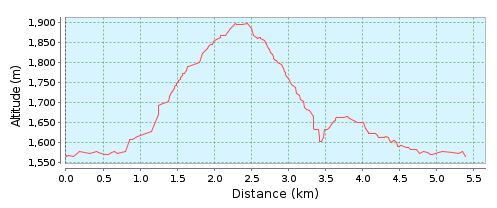
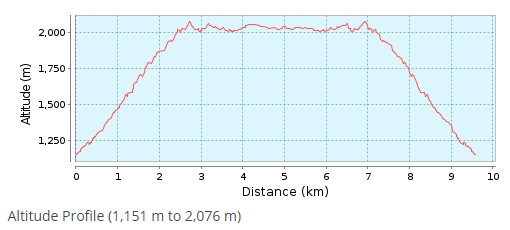
The elevation profile is a graph showing you how steep certain sections of the trail is. For example, if you have 300 m of gradual elevation ascent over 5 km, it’s not that bad. But if you have 300m elevation gain over 1km, that is very difficult. Here are a couple examples.
Uphill both ways!

Everyone is huffing and puffing!
Everyone is angry
Why trail structure matters - loop, one-way, there & back
If you are new to hiking, you might not realize that the trail structure can have a big effect on your hiking day. So here’s a short summary of what you need to consider.
Loop – Many hikers prefer loops because they start and end in the same place and you see something different the whole way. But sometimes loop trails are artificially constructed, so the second half of the loop is not that great, maybe walking on a busy road. So inspect your loop before you trust it.
One way – This means you will start and end at different locations. In Switzerland, this is usually fine because you can almost always use public transportation to get back to your starting point. However it does take some coordination. It’s important to check all public transportation connections carefully. In many hiking areas, bus service is infrequently, only once an hour or maybe only a couple times a day. You don’t want to get stuck and have to hike back. So write down the schedule and keep track of your hiking time.
There and back – These are my least favorite because you see the same scenery coming and going. This is typical for hikes that go up box canyons. Sometimes trail suggestions are given as a “there & back”, but with some creativity you can find a different trail for the way back. Be creative!
Top hikes for younger kids
Here are my top hikes for families that I’m sure you’ll love. Each has beautiful views, interactive elements, play equipment, easy trails, and great picnic areas. They are all close enough to Zurich for a day trip by car or train. Just pick a nice day and try it.
Top hikes for older kids
If you have older kids and want a more challenging hike that will impress, here are our three faves:
Top 10 Lists
Lucky for you, we’ve already done a lot of research on family-friendly hikes. We’ve done dozens hikes in Switzerland, with many successes and some fails. I write up all the details here so you can maximize the fun and minimize the frustration.
A good place to start is the Top 10 lists. Here are a few you might like:
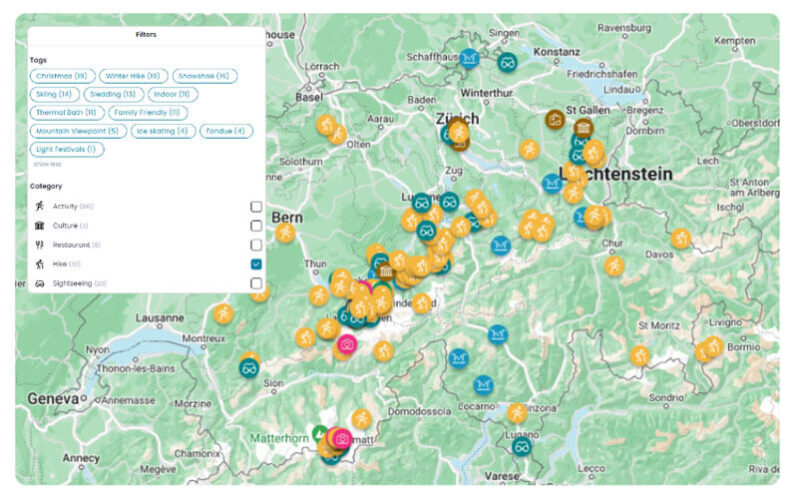
We routinely update our Current Picks to reflect the season and weather. Also check our Hiking Calendar to see what we recommend for each month. My Activity Map is a good way to look for stuff to do in a particular region.
Make sure you follow our Facebook page. On Thursdays or Fridays, I usually post a recommendation for the weekend based on the weather forecast. Follow us Instagram page to see what we’re doing right now.
Use our Pinterest boards
On our Pinterest page, I pin all the my posts into a variety of categories. I also pin hikes from other websites that I want to do soon. Also, every post on our website has a “pinable” so you can pin it for later and remember which hikes caught your idea without having to search for them again.
How do we find new places to go?
I give my husband lots of credit for finding the great outings that show up on this blog. He combs through lots of websites and blogs to get ideas. He also has an uncanny ability to pick the perfect place at the perfect time, like finding the only sunny place when the whole country is covered in clouds. I’m a lucky woman.
Here are all the ways we find new stuff to do…
Get inspired. To get inspiration for new family hikes, we often browse Switzerland web portals like My Switzerland and Schweizer Familie. However, I never rely on them to find detailed trail info. They rarely provide trail maps or detailed trail descriptions and more than once, I’ve gotten totally lost using their info. So I typically study maps before heading out.
Pick a resort. I find the best info on the mountain resort websites. I just pick a mountain and look at the websites for the cable cars in that area. Most promote family-friendly activities, including hikes. Study the trail map before you go. Look for short loop trails designed for families or trails that lead to picnic areas and playgrounds.
Browse online maps. I like map.search.ch that has little icons for cable cars and funiculars as well as attractions like waterfalls, restaurants, rodelbahns, etc.
Study official hiking routes. I use hiking websites like wanderland.ch to find official routes. But since many are too long or difficult for families, I usually get creative and make my own shorter version.
Ask your friends and stalk expats blogs. I find personal recommendations so much more useful than generic overviews on tourist websites.
Wherever you go, visit the Tourist Information Office and grab all the free maps and brochures on offer, especially those outlining family friendly activities and hiking options in a wide surrounding area.
Collect free summer hiking maps and tourist brochures available where you buy your gondola ticket to see other options in that area.
Revisit favorite areas. Since you’ve already been there, you should already have the local maps, making it much easier to select an appropriate trail. Visit the same places during different seasons.
How to beat bad weather
If you stayed home every time it was forecast for rain in Switzerland, you’d hardly go out. So we have become experts at figuring out how to make the best of a bad forecast. Here’s what we do.
Study the precipitation and cloud maps. Even if it’s cloudy in Zurich, it’s often sunny just an hour drive south or west. We rely on Search.ch for our forecasting, particularly the weather animations that show where it will be rainy and/or cloudy over the course of a day. We use this to decide where we will hike.
Watch the mountain webcam channel (on SF Zwei from 7:30-8:30am) on weekend mornings to pick a hiking area with nice weather.
Don’t wait for the weather. When all else fails, put on your raincoat and pack an umbrella. You might just make some memories.
>>> Ready to hike? Get inspired with our current picks for this season.

One Response
What a great tutorial! These are excellent guidelines not only for families but for seniors or people who are unsure of there stamina. This is especially important for visitors who may not have more than a couple of days in an area and want to make the most of their time.
You should write a book. We did for the Berner Oberland. It is called “Walking in Switzerland’s Berner Oberland” and is on Amazon worldwide. It is full of easier walks almost anyone can do.
I have book marked a few of your hikes for our exploration as we like to keep things pretty easy at our ages.