Having comfortable, weather appropriate clothing is so important when hiking, especially with kids. While adults can manage being chilly for a hour or walking with a blister, kids will be miserable and make everyone else feel that way too.
Below is a list of essential hiking clothes and accessories, based on our family’s experience hiking in Switzerland since 2005. You’ll have to experiment to find the best combo for you and your kids, but here’s what works for us and why.
Hiking shoes
When hiking, it’s best to wear sturdy hiking shoes with good tread, which gives better traction on uneven terrain than sneakers. Our family prefers low profile hiking shoes with a flexible sole, which we find more comfortable than stiff hiking boots.
Hoka Speedgoat 5
I’ve been using these trail running shoes for the past three years and I find them very comfortable and flexible. I like them for running on any dirt surface and for hiking. My model is not waterproof, so I only wear them on dry days. They
Buy: OchsnerSport.ch • Bergfreude.ch
Merrell Moab GTX
I’ve used these hiking shoes for many years. I’ve owned three pairs and will probably buy another. They usually last me 2 seasons (hiking every weekend) before the tread is gone. They aren’t super cushioned like the Hoka, but sometimes I prefer that. I’ve worn them on many wet days and they are pretty waterproof for a couple hours.
Buy: Berg-freude.ch • OchsnerSport.ch
Salomon Speedcross GTX
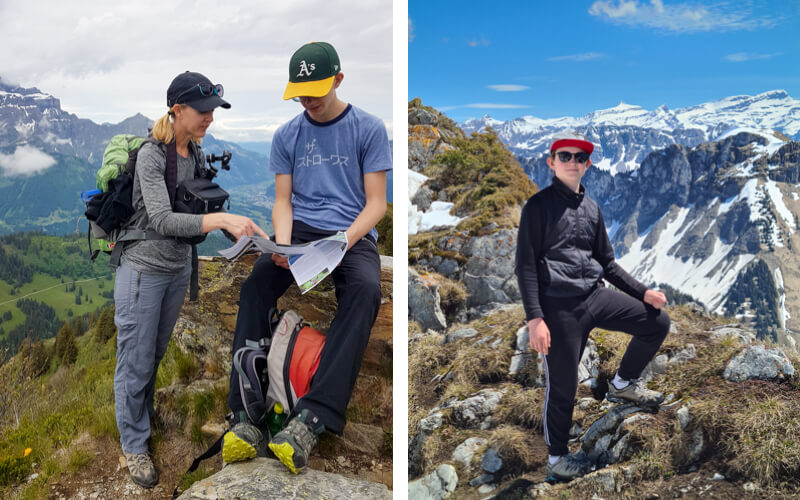
My boys have had several pairs of Salomon hiking shoes, which we like for their drawstring laces that are great for lazy kids. We like Salomon Speedcross trail running shoes, which are light, comfortable, and surprisingly quite waterproof. My kids have wide feet and these shoes fit better than other brands that were much narrower.
Buy: Berg-freude.ch • OchsnerSport.ch
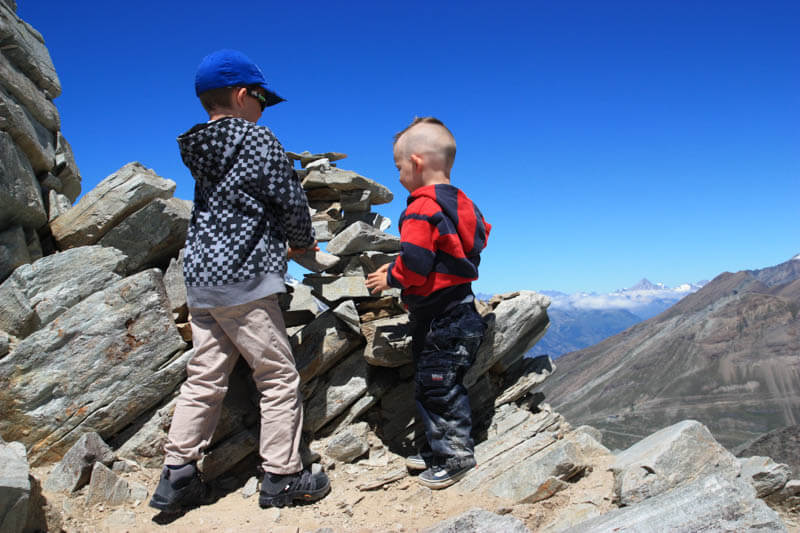
When buying hiking shoes for kids, my priorities are comfort and good tread. Kids have no patience for breaking in stiff, heavy ankle boots. And since they need new shoes every few months, it’s not worth the investment. So we prefer a flexible, lightweight shoe that is immediately comfortable.
When my kids were little, they simply wore inexpensive sport shoes, which were fine for the small hikes. But these type of shoes wear out quickly (often don’t last even one season) and are typically not waterproof. My kids would get wet feet even walking in damp grass – not a recipe for success. So when they were about 6 years old, we started buying higher quality hiking shoes, primarily for waterproofing.
Waterproof hiking boots
Although many hiking shoes say they are waterproof (Goretex label), they aren’t very waterproof in practice. Any shoe that has mesh or lots of stitching and breathable fabrics may resist a little rain, but will get quickly soaked in a downpour or if you step in a stream deeper than a couple cm. We’ve had lots of expensive “high quality” waterproof hiking shoes and boots from well-known brands and all of them were wet after an hour hiking in the rain.
If you want a shoe that will stay dry for a few hours in the rain, you have to get a trekking boot where it’s not just the waterproof coating, but the construction of the shoe that keeps the water out. These are typically made from leather and are constructed so there are a very few seams or places where water can seep in. The downside is that these kind of shoes are typically hot because breathable materials are not super waterproof.
I have a Meindl Air Revolution boots (OchsnerSport.ch) that have kept me dry on many rainy hikes and snowshoe treks.
My husband likes his Lowa Renegade GTX boots (OchsnerSport.ch • Berg-freude.ch).
Hiking pants
In Switzerland, we generally wear long pants to protect from stinging nettle and ticks on the trail, both very prevalent. Plus the weather can change quickly and you can’t put a jacket on your legs.
I currently wear Mammut Runbold hiking trousers. Happily they come in a short version, just the right size for my 165cm height. Most hiking trousers are much too long and I have to hem them so they don’t drag in the mud. I have a regular pair and one convert to shorts. Love them both.
Purchase Mammut Runbold: Berg-freude.ch
Although proper hiking pants are really necessary for kids, I like them because they are more durable and dry more quickly than regular clothing. I also like when my kids have a designated “hiking outfit” to reduce decision making. They just wake up and put on the same hiking pants they use every time and sleep walk to the car.
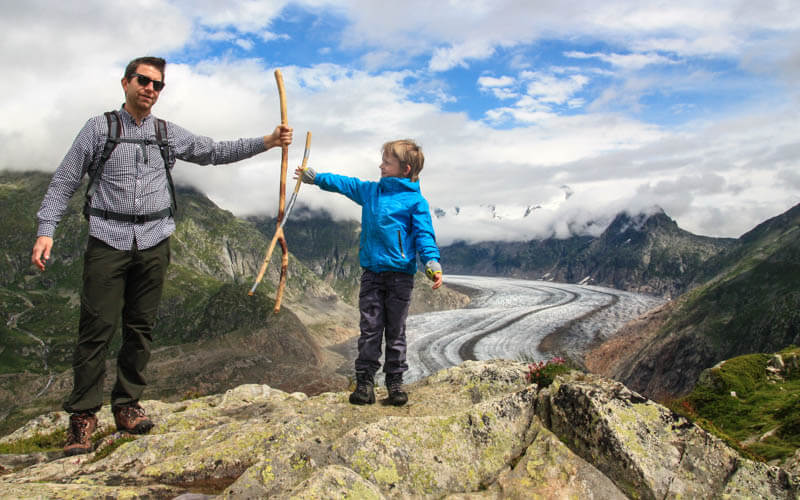
When choosing summer hiking pants, here’s what I look for:
- I prefer a lightweight flexible fabric. Many hiking pants are designed for extreme conditions are too thick, scratchy, stiff, or makes noise when you walk. For most casual summer hiking, you don’t need all the technical features that come with mountaineering clothing.
- For kids, it’s especially important that the cut is loose and fabric is flexible. Kids need to be able to easily climb around on rocks and jump and run.
- I would look for a comfortable waistband. When shopping, I’d suggest trying on a backpack with the hiking pants, so you can see how it feels with the pack waistbelt pressing on the waistband of the trousers. I’ve gotten blisters on my waist from poorly designed waistbands that rub in the wrong places.
- Look for deep pockets that fit whatever you need quick access to, like your phone, face mask or tissue pack. Many pockets are shallow or have bulky snaps and zippers that make them awkward to use.
- It can be helpful to have pants that have legs that easily rollup or zip off, primarily for wading in water (happens more than you might think). But I also think they look ridiculous and are too complicated. So I prefer to just scooch up my pant legs if necessary.
- For cool weather, I often wear running tights, which I find much more comfortable than hiking trouser. Plus I love having a snug side pocket for my phone. I just bought The North Face Wander Pocket Cropped Damen 7/8 Tight, which is a little warm for summer but I really like them – nice deep pocket on both sides.
Base layers
For summer hikes, we usually wear short sleeves shirts and bring layers. So many times, I’ve made the kids to wear long sleeves, then it’s really hot on the trail and everyone is mad at me. My kids usually wear a regular T-shirt. But I prefer a sports shirt with breathable fabric.
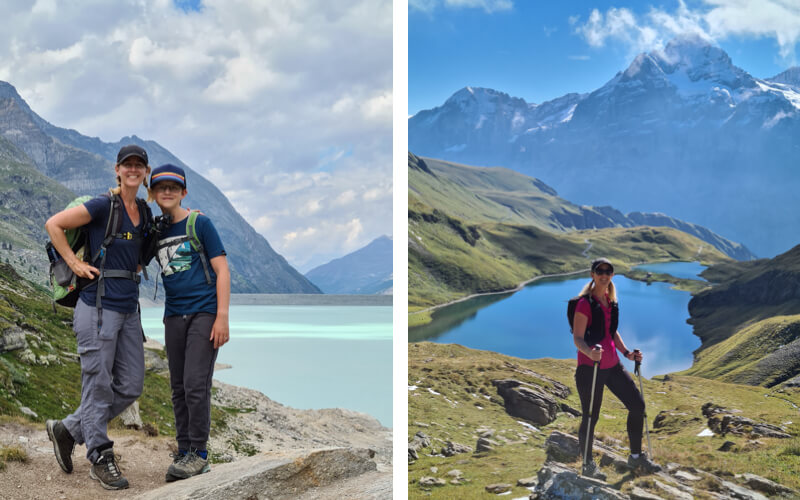
On cool weather hikes, I like a thin long sleeve running shirt made from breathable material. Often you get so warm hiking, that even at cold temperatures (like 12C or colder), you can hike in just your base layer then add layers when you stop for a break. I often pack a shirt like this as a warmth layer because it’s so small to pack.
Warm layers
There are three essential layers for warmth: a windbreaker/rain jacket, fleece jacket and down jacket. On cold weather days, I bring all three. On hot days, I bring all of them in the car and then check the forecast at the mountain and decide then what to put in my pack.
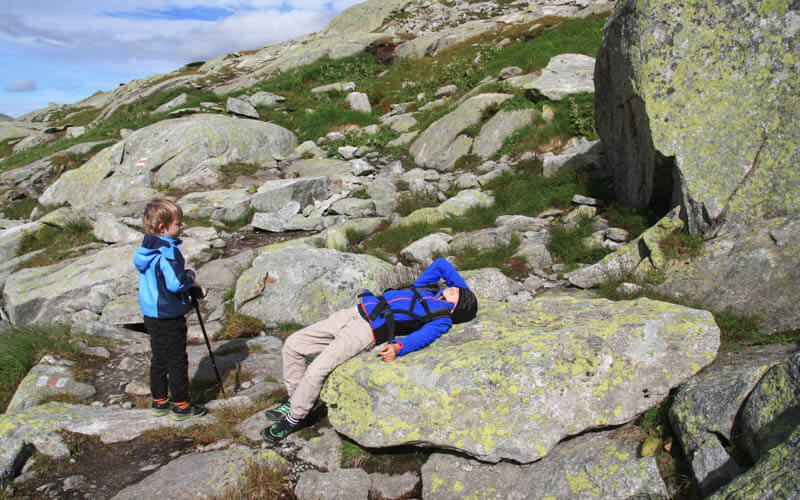
We always bring a fleece jacket in case the weather turns. Over the course of the hike, very often clouds move in or wind picks up and the temperature drops quickly than you expect. Plus when you stop hiking for lunch, your body can cool down quickly and you can be shivering even if it’s not that cold. Unlike rain jackets, I don’t find much difference between cheap and expensive brands when it comes to fleece.
However fleece is not windproof, so it often works better underneath a thin windbreaker jacket. A rain jacket can also serve this purpose and has double uses. Some people only bring a windbreaker, but when I get a chill, I don’t find it warm enough.
If you need more warmth than a fleece, a thin packable down jacket is great option. They are light and pack down smaller than a fleece, easy for a kid to carry. However, they are really annoying to wash because the feathers (down or synthetic) clump up and you have to spend a lot of time fluffing the filling. (Pro tip: put two tennis balls in a sock and add that during the wash and dry cycle. Then put the jacket in the sun, which expands the filling pockets and helps it fluff on its own). Try to buy a jacket with lots of crisscross stitching so the filling moves around the jacket less. If you have just rows, all the filling ends up on one side of the jacket.
For the fleece and down jacket, I prefer pockets and no hood. The hood makes it more bulky for packing and a hat is more effective for warmth. Plus you don’t want a hood on all three layers – it gets crazy if you have to stack three hoods inside of each other. So I make sure only the rain jacket has a hood.
In all cases, try to buy jackets that pack down small so you don’t have to bring an enormous pack. For one season, my son insisted on bringing his huge fluffy everyday winter jacket, but he only wore it for the first 10 mins and it took up my whole backpack. Higher end brands tends to be more packable because they use higher quality technical fabrics.
Sun protection
Note: Thanks to cerjo® sunglasses for sponsoring this post!
This year, we’re happy to be collaborating with cerjo® sunglasses, which have definitely stepped up our hiking style for our Swiss summer 2021. Sunglasses are so important when hiking, both for comfort and eye protection, especially if you are near water or snow and glaciers, which reflect the light. Although I always remember my sunglasses, I often forgot to bring sunglasses for the kids. So on bright days, they ended up wearing mine and I was left squinting. Now everyone has a pair they leave in their hiking backpack, so we never forget them.

We chose cerjo® sunglasses with polarized lenses, which provide more eye protection and reduce glare, allowing you see through water. We love that they are good quality and stylish but not so expensive that you worry about breaking or losing them, as might happen with kids. We also like that have many fun and sporty styles for children. See the 2021 cerjo® collection here.
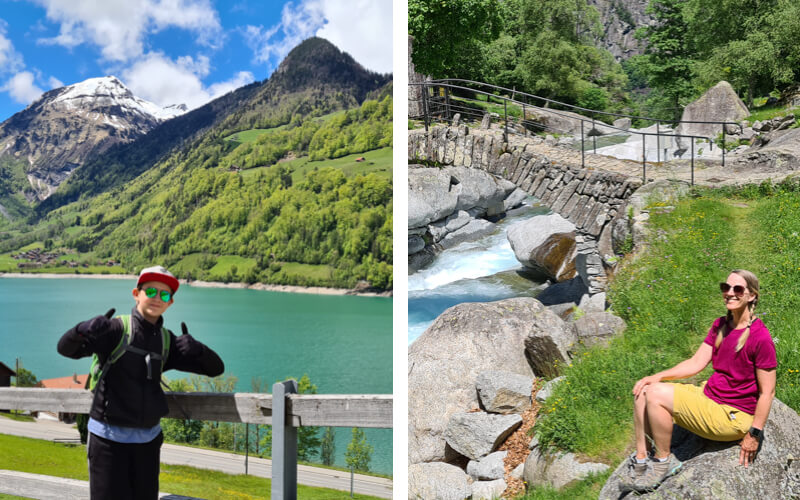
In addition to sunglasses, always bring a hat with a visor to keep the sun off your face. The sun is stronger than you think at higher elevations and the delicate skin of young children can burn quicker than you think. For little kids, it’s nice to get a circle brimmed hat with a chin strap to maximize the protection. My older boys like to wear baseball caps from their favorite team or gamers, but find those caps too thick and heavy. I prefer a running hat that has a thin breathable fabric, so my head doesn’t get too hot.
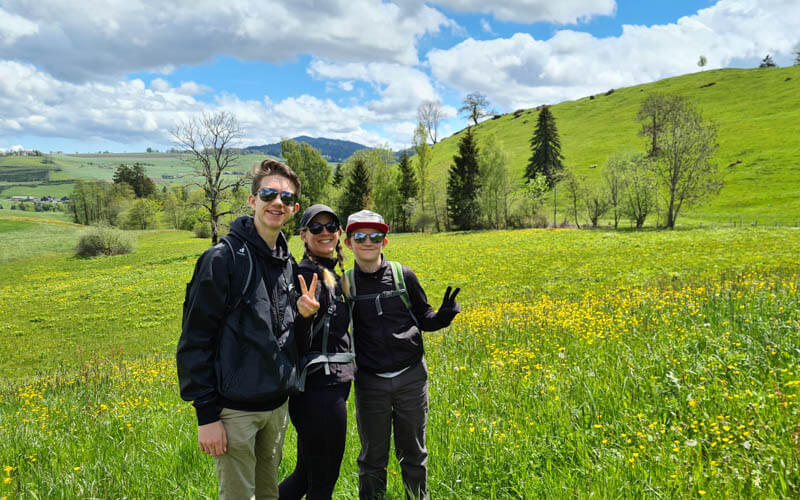
And don’t forget sunscreen. Even if it’s cold and cloudy, you can still get sunburned.
Rain gear
Rain jacket
The most important item is a rain jacket. The weather can change quickly and we’ve been caught unexpectedly in the rain or cold wind more than once on the trail. Just always bring it even if you think the weather will be nice. It seems like every time I don’t pack it, that’s exactly the time I need it.
Do not skimp on quality on this item. Cheap jackets will soak through not matter what the waterproof label says. Even expensive jackets aren’t always really waterproof. If you want an absolutely waterproof jacket, get the plastic-y versions that have taped seams. They don’t breathe at all but they will keep your little ones dry.

After suffering years with a completely useless rain jacket, I did a lot of research and bought the Outdoor Research Aspire rain jacket (I got it in the U.S., I couldn’t find it for sale in Switzerland). I really like this jacket and I’m 100% dry even in hours of rain. I liked it so much I bought a second one for my teenager. My younger son has been using his Reima jacket, which has been really good as well.

However, we now prefer rain ponchos. The main advantage is that you can easily take it on and off without taking off your backpack. This helps when it’s raining on and off and you don’t need the jacket the whole time. You also have more freedom of movement under the poncho.
We prefer ponchos that go at least to the knee, but no longer or they get muddy. Sleeves are helpful, but not required. Some ponchos have elastic straps on the inside so you can secure Ponchos are often sold in the cycling section.
Rain pants
You don’t really need rain pants unless you expect to be outside in the rain for more than an hour. They will keep you dry, but they are usually uncomfortable. The waterproof fabric is bulky, hot and makes a swishing noise when you walk. It’s kinda like wearing a big diaper. So you don’t want to wear them unless you really have too. Rain pants are also helpful with mud and wet grass, but in those cases, I might prefer gaiters.
For small kids, we like the rain overalls with the elastic band that goes under their boots. They aren’t breathable, but they are very waterproof. Your kids can basically sit in a puddle and stay dry. Every kid who goes to Swiss pre-school or kindergarten will have these. Rukka and Reima are popular brands in Switzerland, but there are many others to choose from: Tchibo, Kamik, Playshoes, etc.

For older kids and adults, we just buy inexpensive rain pants from Decathalon that have kept us dry on many rainy hikes. Make sure the rain pants aren’t too long or they will drag in the mud. Many rain pants have an elastic closure on the bottom, which keeps the water from splashing into your boots, but also makes it more difficult to get the pants on without taking off your shoes. I prefer ones that have a zip at the cuff, so you can more easily pull them over your shoes. In this case, it’s nice to have a velcro strap or snap at the cuff helps to cinch the pant around your boot.
I prefer rain pants that have a full zip down both legs. This means I can take them off without dragging muddy boots through the inside of the pants. It looks absolutely ridiculous when you are putting them on, but everyone is jealous when I’m totally mud free after the hike.
FYI, the waterproofing doesn’t last forever, so don’t be surprised if your rain pants aren’t waterproof anymore after a couple seasons. You can get a waterproofing spray that refreshes the coating. I haven’t tried it yet, so I’ll report back later.
Hiking socks
Choosing the right socks helps prevent blisters and hot feet, which was my kids’ #1 complaint. For summer, I don’t like technical “hiking” socks, which are usually too tight and hot and shrink to baby socks in the wash. I prefer thin breathable running socks. For cold weather, I like wool socks that keep my feet warm even if they get a little wet.
Swimmers
Many times we are hiking by a river or lake and sometimes it’s hot enough to justify jumping in. Since we usually forget to bring our swimming suits, so either we go skinny-dipping or my kids swim in their underwear and have wet underwear for the rest of the hike. So you might want to pack a “just-in-case” swimsuit into your pack.
Tips for dressing kids for a hike
Prioritize comfort
For our family, the most important thing is to be comfortable. Generally we don’t need technical hiking clothes on the type of family hikes we do. Also, little kids don’t sweat that much, so they don’t require performance fabrics. So I mostly let the kids dress themselves with some guidance on the weather. I’ve bought proper hiking pants for my kids, but they prefer sweat pants and shorts. Girls that hike with us often wear cute dresses with leggings. Whatever works!

Check the weather – twice!
Weather in the mountains can change quickly! So dress and pack for what the weather could be, not for what it is. Before getting dressed, check the forecast of your destination –> not the valley station, but the mountain itself. It could be 20C at your car, but only 11C at the top of the cable car. We like meteo.search.ch, which shows a forecast for temperature, rain, clouds and wind.

Bring extra clothes for emergencies
In addition, I often pack extra clothes (most importantly socks and underwear) for my kids in case the weather changes or they fall in the lake or mud (happens more than you might think). I often throw in a variety of clothes in the car, then decide what to wear and bring in our pack once we get to the mountains and see what weather is really like. Better prepared than miserable.
Where to shop for outdoor clothing in Switzerland
You can get most everything you need from the big sports stores: Migros SportXX, Ochsner Sport, and Decathlon. Transa has lots of high quality outdoor clothing and gear at high prices, so you might try their outlet store that has great deals. There are several online outdoor shops that ship to Switzerland: Bergzeit I’ve also found sports gear at good prices at Galaxus.ch.
See also: Where to buy hiking & winter clothes in Switzerland




6 responses
Really great site. We’re coming to Switzerland for the first time with the kids to hike and camp and I’ve learned more from this post than anywhere else! Thanks so much
So glad I could help. Have a great time on your trip!
Hey there Tanya, were planning on a summer trip to zermatt, looking to hike there! is it usually windy with summer hiking?
The weather changes often so it’s hard to predict. Yes, it definitely can be windy, especially in the mountains. But you never know.
Hi Tanya – Let me begin by saying that your blog is so informative, it really is super helpful as I plan my hikes in Switzerland. I am a beginner and will be in Switzerland in 3rd week of April. Do you recommend I buy hiking shoes from Decathlon or is it ok if I wear my regular ASICS running shoes for the Sattel Panoramic trail?
Hi! Sorry for the delay in my response. I think the running shoes should be fine on the Sattel panorama trail. Hiking shoes from Decathalon should be fine for most casual hiking trails in Switzerland. Have fun out there!