If you are new to skiing in Switzerland, here are my top tips to help you survive and thrive this ski season. It’s important to already start preparing in fall, so you are ready as soon as the snow starts to fall and ski resorts open.
Below I include tips for winter clothes and equipment, booking ski holidays and winter activities, skiing on a budget, and safety measures.
Switzerland is the type of place where people book their holidays a year in advance, replace equipment on a regular schedule, and have everything on a calendar so you don’t miss a thing.
In contrast, I used to be a panic the night before our first ski day, realizing that nothing fits, it’s all dirty and broken, and the gloves are so stinky no one wants to wear them.
But I’ve learned a few good habits living in Switzerland so many years, now renting skis and buying winter clothes on sale months before I need them. Use this checklist so you can stress less too!
Winter clothes and equipment
1. Rent skis for the season in October
If you plan to ski more than a couple days, it’s the best value to rent equipment for the season, especially for kids who will grow out of that equipment each year.
Ski rental season starts the beginning of October. It’s best to rent your equipment early to get better selection and before they run out of your size.
See also: Where to rent and buy ski equipment in Switzerland

2. Reserve short-term rentals in advance
Do not wait until the week before your ski holiday to rent your equipment. You’ll find that most equipment is gone, reserved weeks in advance.
Contact your rental shop now and ask when is the earliest you can reserve. Then you can make sure they will have everything you need in the right sizes.
Now you can also rent winter clothing for your ski trip through Cirkel Supply Co. This should also be done in advance to ensure availability. Renting with Cirkel is more cost efficient, sustainable, and convenient – they ensure safe delivery to any holiday destination across the Swiss Alps.
3. Evaluate your ski gear
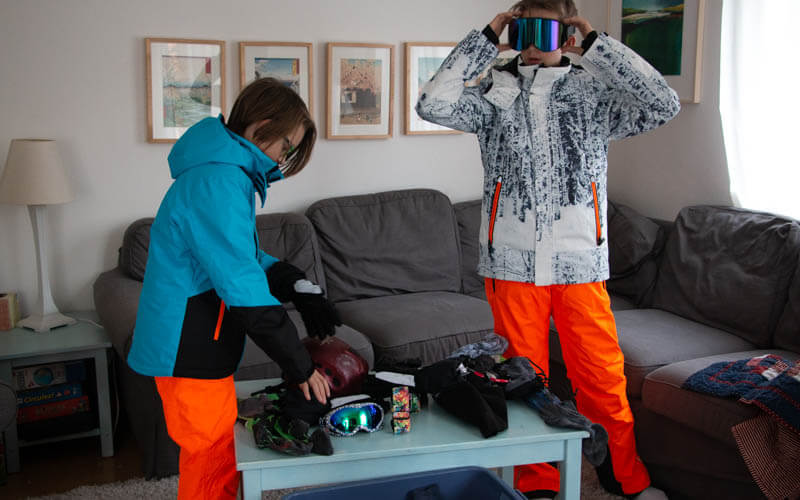
In October, you should dig the winter clothes out of the cellar. Have everyone try everything on to see what still fits and what needs replacing. Wash the stuff you are keeping and make a list of what you need.
See also: How to Dress Your Kids for Skiing (10 essential tips!)
4. Sell your old winter clothes & equipment
You can sell winter clothes or equipment in good condition at a secondhand shop or “Kleiderbörse” (aka clothing flea market) to sell. Many community centers host these Kleiderbörses in October. You can search for Börse on Kindex.ch.
Things that don’t sell, you can donate to a Brockenhaus, aka thrift shop. Some Brockenhaus are picky about what they take, so don’t expect to just drop off a box. They might not take everything and you’ll still need to visit the dump.
5. Watch out for pre-season winter sales
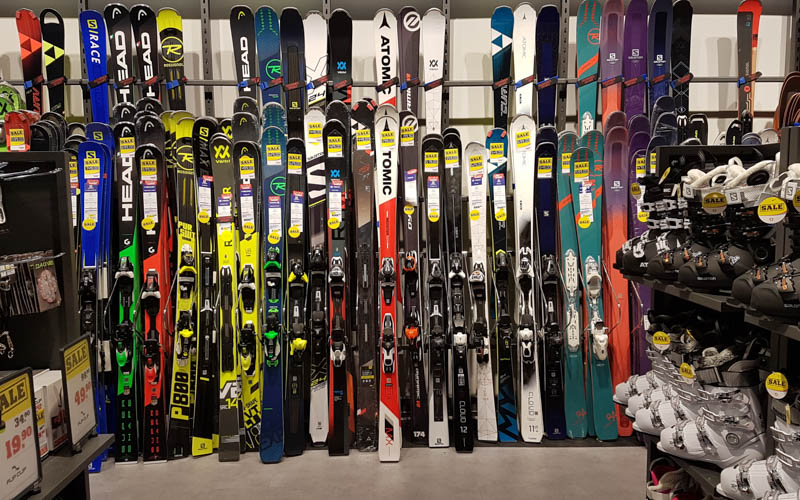
Many sport shops have sales on winter clothes and equipment from October through early December. You can get some great deals if you pay attention and already have a list of what you need.
OchsnerSport usually has discounts on skis, snowboards, and ski/snowboard boots in November.
See also: Where to buy outdoor clothing & equipment in Switzerland
6. Buy equipment before it sells out
Some winter equipment can sell out quickly, especially with the recent supply chain problems. Often snowshoes and ice cleats sell out by end of December and are very difficult to find the rest of the season. If you need something, get it now.

7. Service your skis & boards in November
You should ideally service your equipment at least once per season. It’s best to get your equipment serviced before the ski season starts, which can be as early as mid November.
Many sport shops send the equipment to another location for servicing, so it can take up to a week. If you drop it off on Monday, you might not get it back in time for the next ski weekend. So better to get this done before ski season starts, so you don’t miss a bluebird powder day because your skis are still in the shop.
Some mountain resorts offer overnight service, where you can drop off equipment in the afternoon and have it back for the next ski day. So check with local shops. But note that this quick service can be more expensive.
Book winter activities
8. Book your ski holiday asap
Many Swiss people book their ski holidays a year in advance, often during their last ski holiday. So accommodations can book out very early. At the minimum, I would book in October. Even then, you will find that the options are limited and prices high. Be aware that during school holidays, many ski accommodations will only book for a full week, usually Sat-Sat.
See our suggestions for Kinder hotels
9. Book kids ski camps in October
Sleepaway ski camps (aka Skilager or Schneelager) are really popular in Switzerland and can sell out quickly. In Zürich, ski camps are organized through Schneezüri. If you register for a Schneezüri camp, you can rent the kids ski equipment for a 20% discount.
Many school classes organize an optional ski lager, maybe starting in 5-6th grade. These are relatively affordable and more fun for kids that prefer to travel with kids they know. These camps are usually held during the school holidays. So if you want your kid to participate, make sure not to book your family holiday during the same week.
10. Book ski lessons in November
If you have booked a ski holiday, contact the ski school at your destination to reserve a spot in their ski school. Do this as soon as the ski school office opens, probably in November or early December. You can email them earlier than that to see when they open.
Zürich city offers ski lessons through Sport Aktiv. The course fee include transport to the Flumserberg ski resort, group instruction, lift passes, lunch and supervision the whole day. More info and booking on Schnee.ch.
The International Ski Club of Zurich offers ski lessons in English, also at Flumserberg. You can usually book these in mid November.

Many villages have local ski clubs that offer ski lessons, often that include transporting kids back and forth to the slopes. Check with your local community center to see what they offer. You may need to sign up for this in the fall.
See also: What to expect from Swiss ski school
11. Make a winter bucket list
Winter can be a long dreary time if you don’t make an effort to enjoy the charms of this special season. So I suggest making a bucket list just like you might do for summer.
This could include trying a new long sled run, skiing at a new resort, doing a full moon fire walk, ice skating on a frozen lake or simply building a snowman. Checking off your list helps you have things to look forward to.

12. Check calendar of special winter events
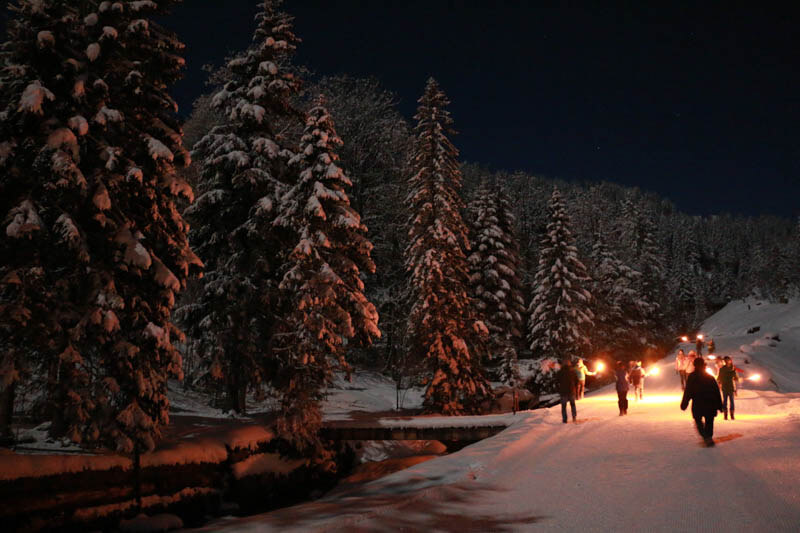
Many winter destinations offer special winter experiences that are only available for limited times or on certain dates, like full moon snowshoe, night skiing, lantern lit winter walks, ice skating trails, etc. Some of them require advance booking and sell out. Some require a group, so you might start asking friends now to.
If you want to do any of these, check the special events calendars of the mountain resorts to see what they offer. Then put a couple on your calendar so you don’t forget.
Budget tips for skiing
13. Get a “SwissPass” card for everyone in the family
A great way to save time is to buy your passes online and skip the ticket line at the resort. When you buy ski tickets online, you usually load them onto an old SkiCard or onto your SwissPass.
If you book Snow’n’rail offers, you must load them onto your SwissPass. But to do this, each person in the family needs a SwissPass, including children. You can get a SwissPass for free, but you need to order it in advance because they mail it to you.
14. Monitor the SBB Snow’n’rail offers
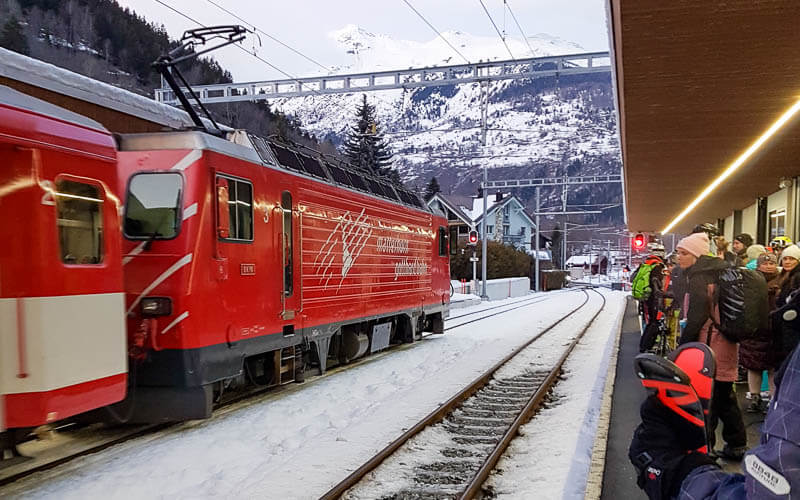
You can get great deals with the SBB Snow’n’rail offers. These offers typically give a discount on the ski day pass and public transport to the resort. Sometimes the offer includes a discount on equipment rental and ski lessons. So it’s worth it to monitor their offers even if you normally drive to the ski resorts.
If you book a 6 day pass through Snow’n’rail (like for your school ski holidays), it includes free luggage transport to your ski destination up to CHF 60 in value. This is a fantastic benefit!
See Snow’n’rail info
15. Buy a season pass
If you plan to ski a lot at the same resort, you can save by buying a season pass. But Switzerland also has regional passes that cover multiple resorts, adding more variety to your winter. Many of these are year passes, covering both summer and winter.
Many of these passes give a discount if you book early. If it’s just a winter pass, usually you get a discount if you buy before mid December. If it’s a year pass, usually you have to buy it in April for the coming summer and winter season. Here are a few regional winter season passes to consider:
Meilenweiss – winter & summer pass for 19 mountain resorts in central and eastern Switzerland (Flumserberg, Stoos, Pizol, Elm, Braunwald, Sattel-Hochstuckli, etc).
Schneepass Zentralschweiz – 15 mountain resorts in central Switzerland including Engelberg Titlis, Engelberg Brunni, Andermatt, Melchsee Frutt, Hasliberg, Stoos, Klewenalp, Sattel-Hochstuckli, etc. You can buy this pass for winter only or as a year pass. Sample price for adult winter only: CHF 1130. Family discount 20% for all passes bought for the family.
graubündenCard – includes 20+ mountain resorts in Graubünden including Davos/Klosters, Arosa Lenzerheide, Flims/Laax, Andermatt-Sedrum, etc. Sample price for family abo (2 parents and all children under 18). Discount if bought in April for coming summer/winter season.
AlpsPass – In 2026, this pass includes winter at Jungfrau Ski Region, Aletsch Arena, Engeliberg-Titlis, and Adelboden-Lenk. Discount if you buy before mid December.
Magic pass – a winter & summer pass for 40 mountain resorts in western Switzerland, mostly in Valais & Vaud. Pass validity runs from May through April the following year.
Winter Safety & Logistics
16. Snow tires
I usually remember to change to winter tires when we have the first snow in Zürich. And then my garage has a 4 week wait because there are so many appointments. So best to make your appointment a few weeks in advance for early November.
17. Bookmark snow report
Here are a few resources I use for monitoring snowfall, avalanche risk, and weather reports.
SLF (www.slf.ch) is the best resource for avalanche bulletin. They also have a good snow map. For easier access to their info, you can download their free White Risk mobile app.
I like the weather and snow reports on Search.ch. I particularly like their cloud forecast that gives you an idea if the sun might make an appearance. On their winter page, you can quickly scan which ski resorts are open and sort the list by resorts within a certain distance of you.
I wouldn’t completely trust the snow depth reports. But it’s a good starting place. I would double check any information with the specific resort website.
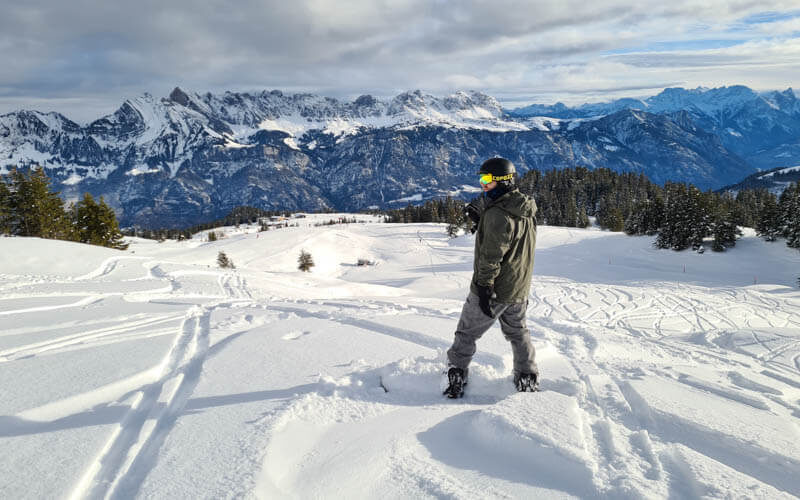
You can usually check webcams on the specific ski resort website. But you can browse hundreds of webcams on SwissWebCams.ch
Other snow reports:
18. Rega Swiss Air Rescue Service
Rega provides air rescue service in the famous red helicopters that you’ve probably seen flying around the mountains. They transport medical care and help to those in emergency situations, particularly for accidents in the mountains.
You can support Rega by becoming a patron for a small yearly fee. If you require emergency medical assistance from the air, for patrons, Rega can waive all or part of the costs if they are not covered by your health or other insurance policy.
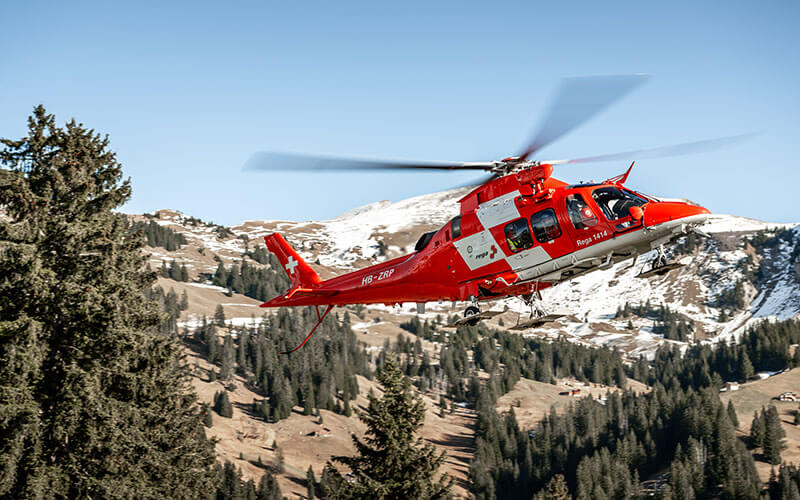
Rega patronage is renewed yearly in May. So if you purchase for winter, you will renew again the following May.
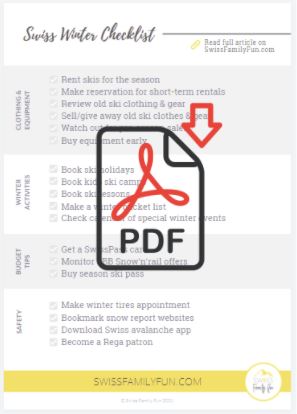
Download printable checklist
Click the image below to download a printable version of the Swiss Winter Prep Checklist. I hope these tips help you have a great winter in Switzerland!