This fun museum is full of interactive exhibits relating to different forms of communication: body language, speech, the written word, telephones, video, photography, digital media, etc. We played cooperative games that relied on good team communication, we compared 20 Swiss German dialects, we dubbed movie clips, we timed ourselves sorting the mail, we wrote and sent letters to different parts of the museum, etc.
I was planning for a short visit, but after 3 hours, we were still having fun and hadn’t seen everything. This museum is absolutely packed with information and would be great to enhance themes your child might be studying at school.
I think this museum is best enjoyed by older children who can read, since many of the activities involve reading text, although there are some activities specifically for smaller children. Thankfully most all text and activities were in English as well as German and French. We really enjoyed our visit and would recommend it, even as a rainy day trip from Zürich.
Note: Thanks to the Museum of Communication for hosting our visit. All opinions expressed here my own.
| Location: | Bern Switzerland |
| Address: | Helvetiastrasse 16, 3000 Bern 6 |
| Car: | 1hr20 from Zürich, 1h10 from Basel, 1hr15 from Luzern. Small car park at museum. Metered and blue zone street parking. |
| Train: | 1hr20 from Zürich, Basel or Luzern to Bern. From Bern, Bahnhof, take tram 6, 7, 8 or bus 19 to Helvetiaplatz, then 3 min walk to museum |
| Open: | Tues – Sun 10:00 to 17:00, Closed Mondays. |
| Price: | Adult CHF 15, Child aged 6 to 16 CHF 5, children under 6 free free with Swiss Museum Pass and Bern Museum Card |
| Services: | cafe, picnic area outside, lockers, strollers ok, elevator access |
| More info: | www.mfk.ch |
Getting There
This museum is located in Bern, in the museum district, about 1hr20 drive from Zürich.
By car: Drive to Helvetiastrasse 16, 3000 Bern 6. There is a small parking lot at the museum (about 20 cars). It was free to park there on a Saturday when we went. There is some metered parking on the street in front of the museum that is unrestricted on weekends. There is also blue zone parking on the street. There is a paid parking lot a short walk from the museum at Bernastrasse 15, 3005 Bern.
By public transport: From the Bern main train station, ride tram 6, 7, or 8 to Helvetiaplatz. From this tram stop, it’s a 3 min walk to the museum as shown on the map below.
Impressions of the museum
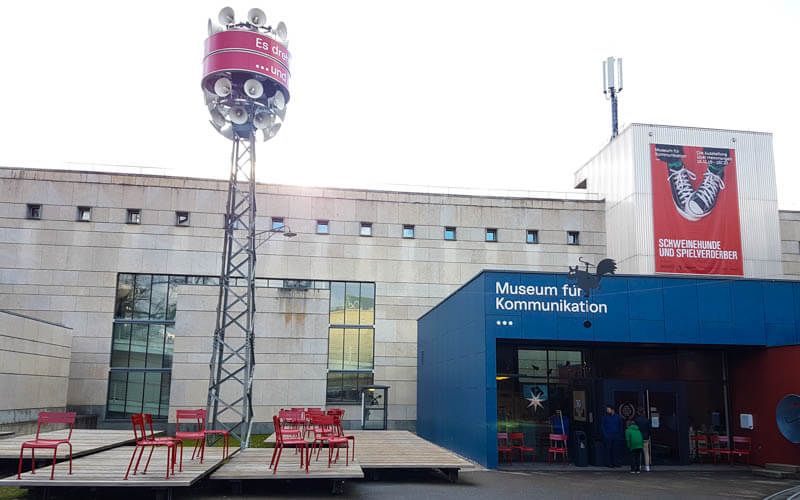
I’ll show you some of the things we liked to give you an idea of what to expect. Then you can go explore on your own and be surprised. Here’s the entrance to the museum.
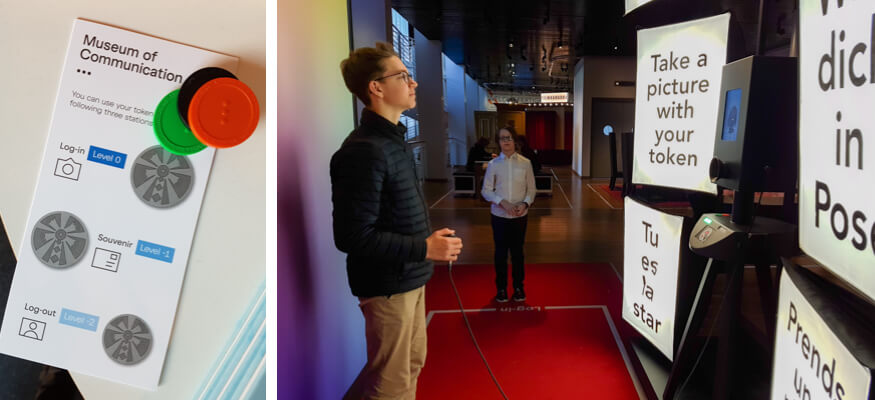
When you buy your tickets, you each get a token as shown below on the right. This can be used in three places in the museum. Token part 1. When you first enter the museum, use the token to take your picture, alone or with family and friends. You will print this photo out later on the bottom floor of the museum.
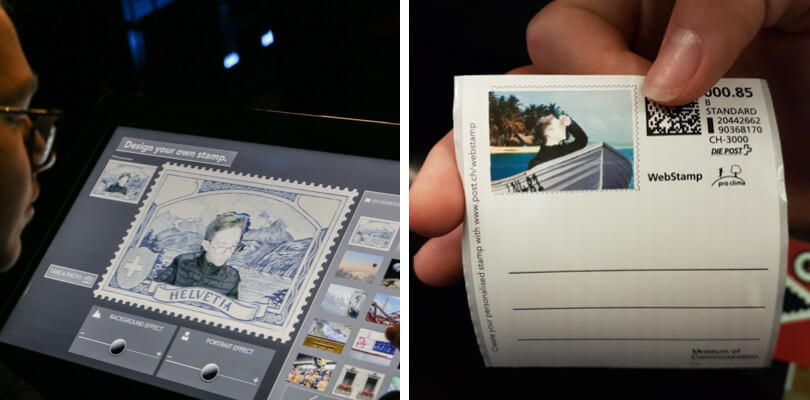
Token Part 2. On the -1 floor, use the token to design a stamp with your picture. Then you can print out that stamp (real stamp!). It also comes with a postcard from the museum.
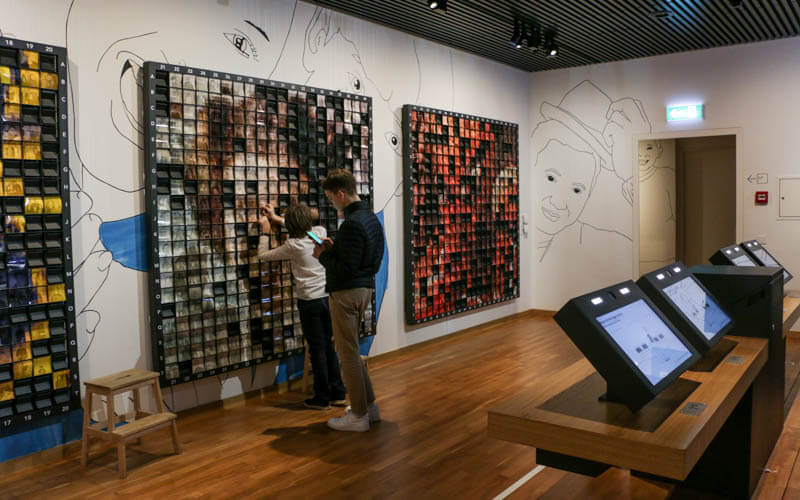
Token part 3. On the bottom floor of the museum, you use the token to print out your picture you took earlier. You also choose which collage it will be a part of. The computer tells you where to place your photo on the collage. Ours was on the Princess Leia face.
Games & Activities
There are so many displays and activities, you can simply wander and try anything that catches your eye. Some might find this chaotic, but I like this setup because each person can find something they like aren’t forced into a particular path through the museum.
In this game, we had to communicate efficiently so each person lifted or tilted their side at the right time so the ball moved through the maze. Tougher than you might think.

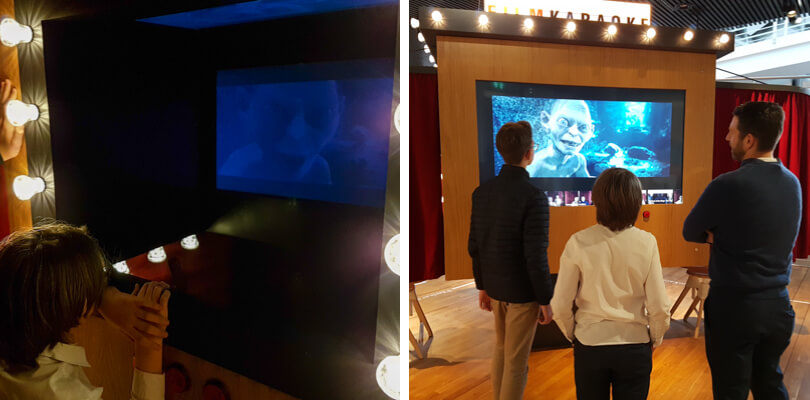
We all love the movie booths where you could dub short movie clips. You can choose between clips from movies like Harry Potter, Lord of the Rings, James Bond, etc. Then they show the clip with the words printed on the screen so you can practice. Then you record your voice trying to match the clip. When you are happy with it, you can publish the clip to the big screen outside the booth so everyone can see. We had fun making up our own silly dialogue.
You can also act out the scene with the real actors dialogue. So it films you instead of recording your voice. You try to match your mouth and actions to the sounds and dialogue of the movie.
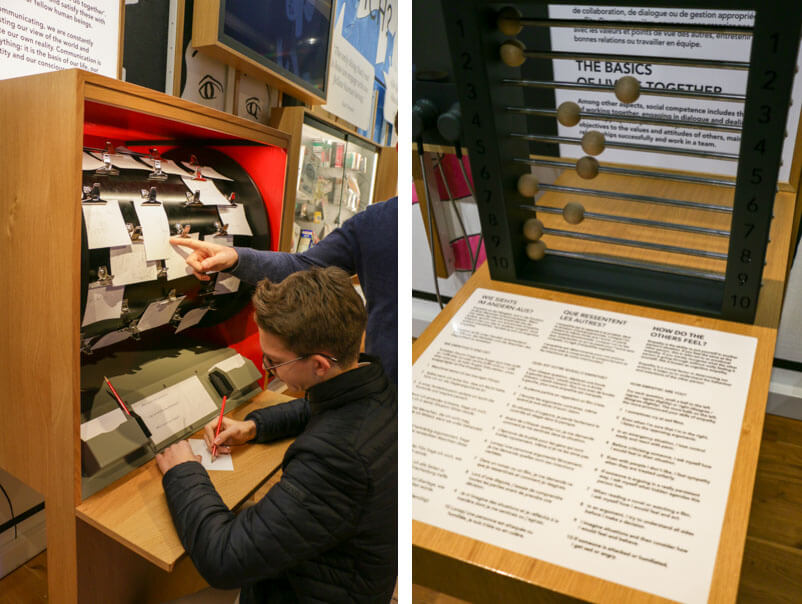
On the left below, you are invited to write something that makes you happy and attach it to the wheel. It was fun reading what other visitors wrote. On the right below, you rate how empathetic you are to how others feel.
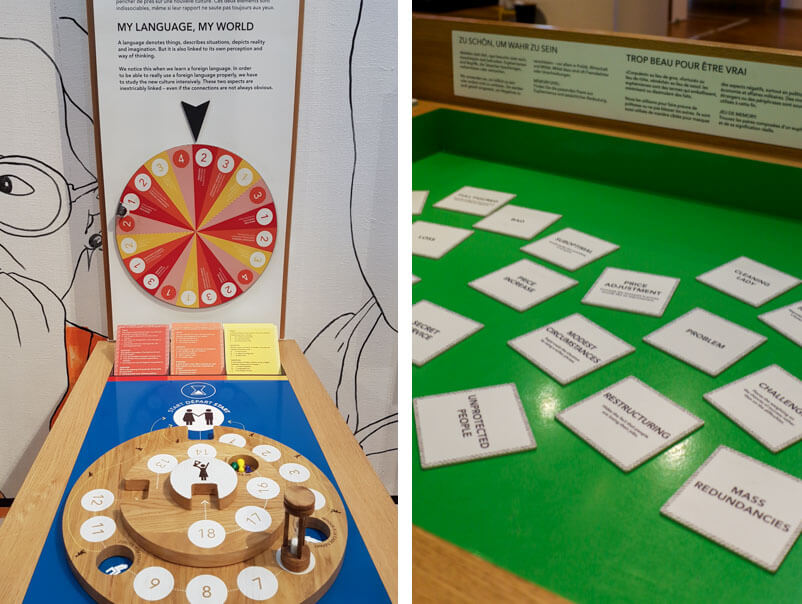
On the left below, you compared various sayings between languages and cultures. For example: “In the canton of Valais, cholera is not a highly infectious disease but is instead a) an open fireplace, b) a vegetable pie or c) the mother-in-law. Answer: c.” On the right below, you match euphemisms with the real meaning, e.g. sub-optimal = bad.
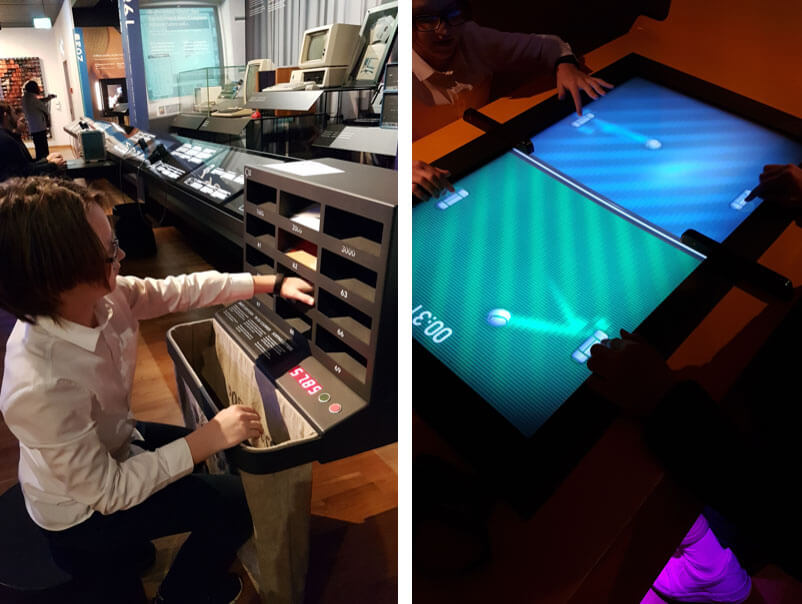
On the left, you can time yourself sorting letters. We were so slow! On the right, you can see how good you are at multi-tasking by simultaneously playing a separate game of pong with each hand, so difficult!
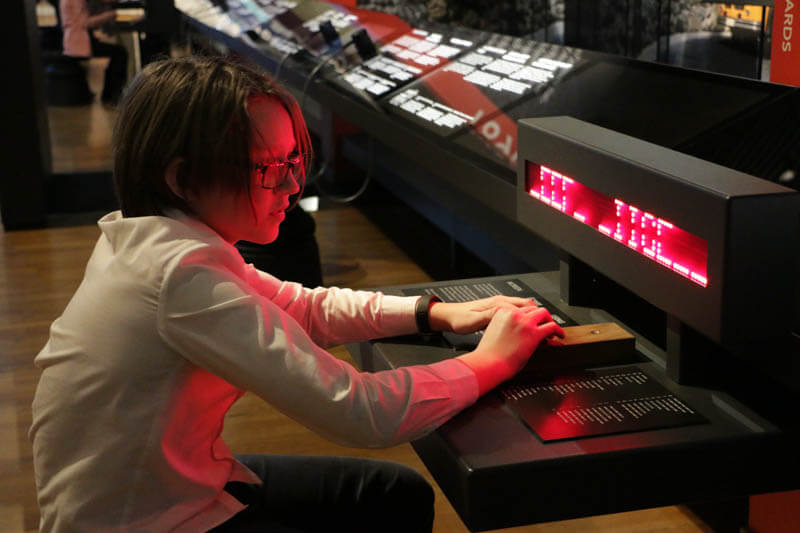
Trying old methods of communicating, like this morse code machine.
For smaller children
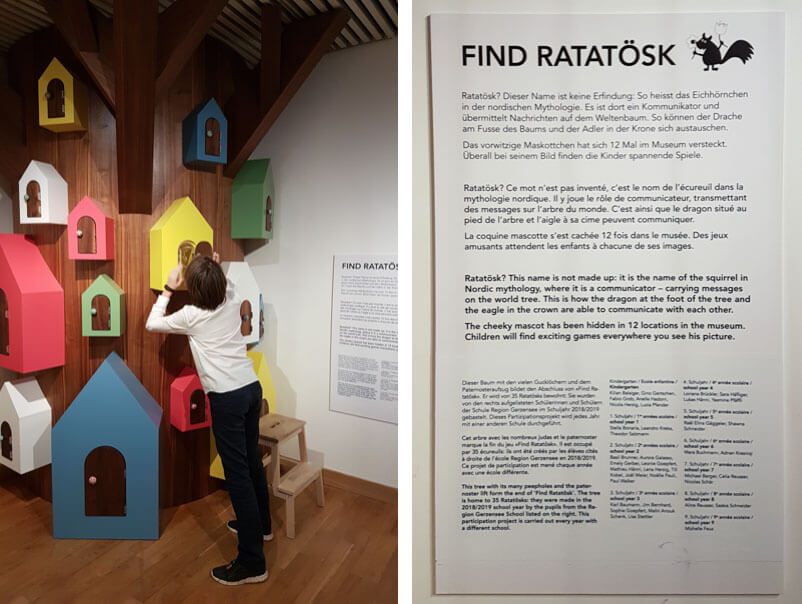
As I said before, most exhibits are more fun if you can read. But happily, the museum has a variety of activities for small children. The squirrel mascot Ratatösk is hidden behind little doors in 12 different locations around the museum. Behind each one is a fun game or activity for children.
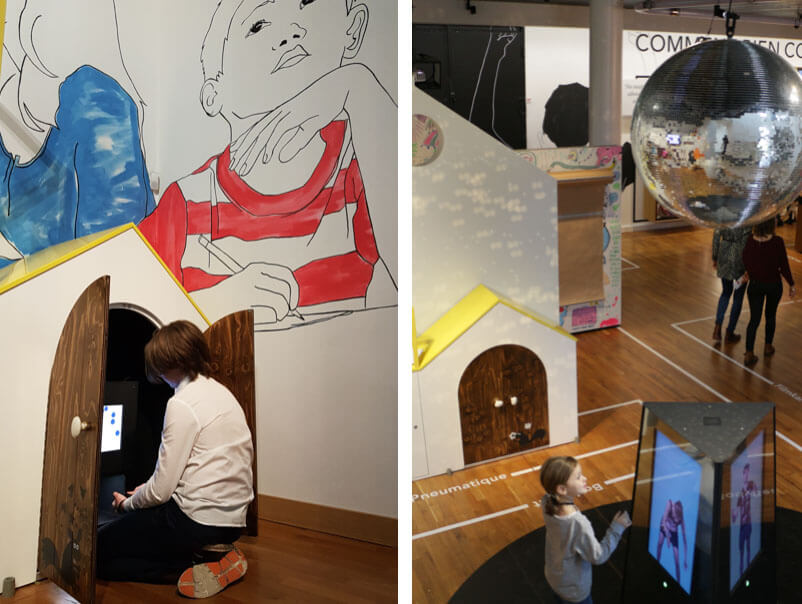
At the doors on the left, children can insert tokens in the machine, which makes a sound. Then it shows a bunch of pictures and the child has to guess what made the sound.
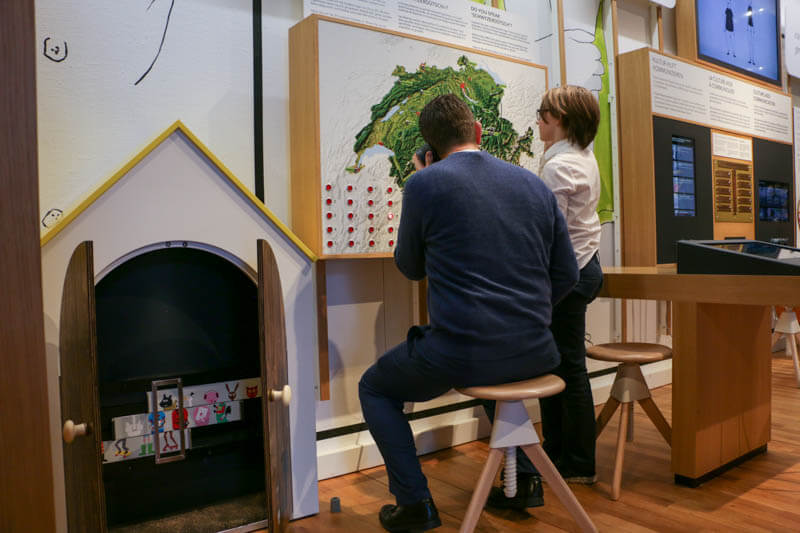
Here’s one example of the little doors next to an activity for bigger kids.
Swiss Post
Part of the museum is dedicated to the history of the Swiss Post, with lots of post artifacts described on multimedia touch screens. On the left below, you can send messages via the pnematic tube to other parts of the museum. The kids loved this, writing or drawing silly things, sending the message, then running after the message shooting through the tube all through the museum, then laughing watching their brother or a stranger read the message.

There was also a wall filled with historical Swiss post vehicles, including bicycles, pedal carts, carriages, and trucks. They also have the burnt out getaway vehicle from a CHF52 million robbery of a Swiss Post office in Zürich. There is a touch screen that gives more info and videos about some of these vehicles that we found interesting.
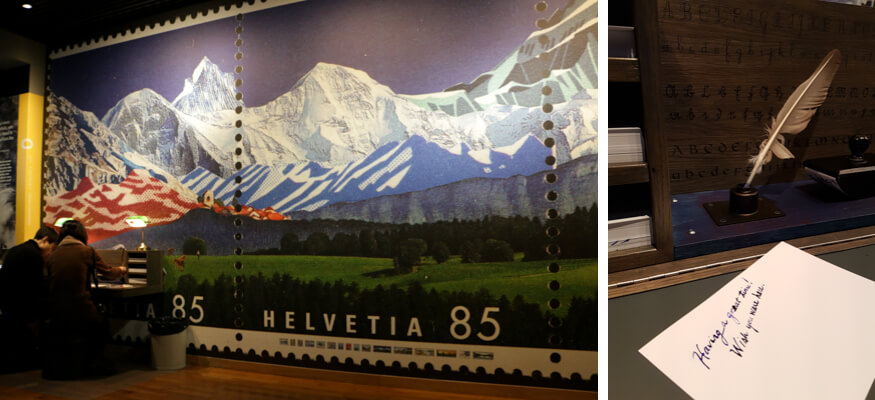
This corner had an old fashioned writing desk where you could write letters with a quill and ink, not so easy!
A little history
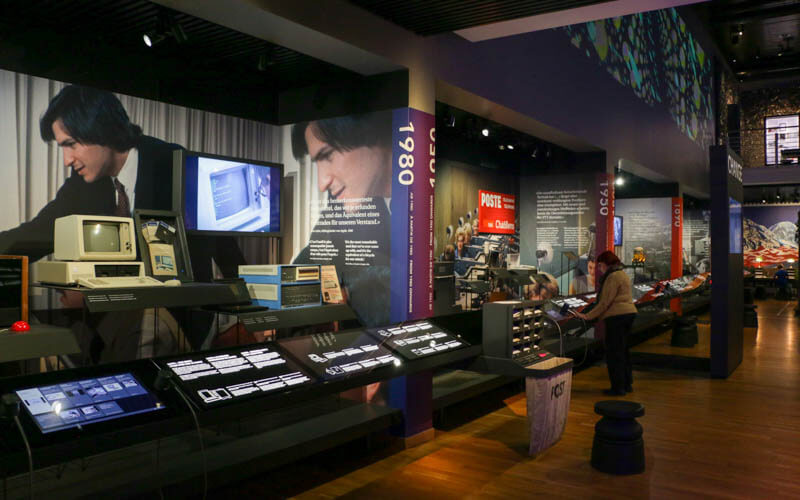
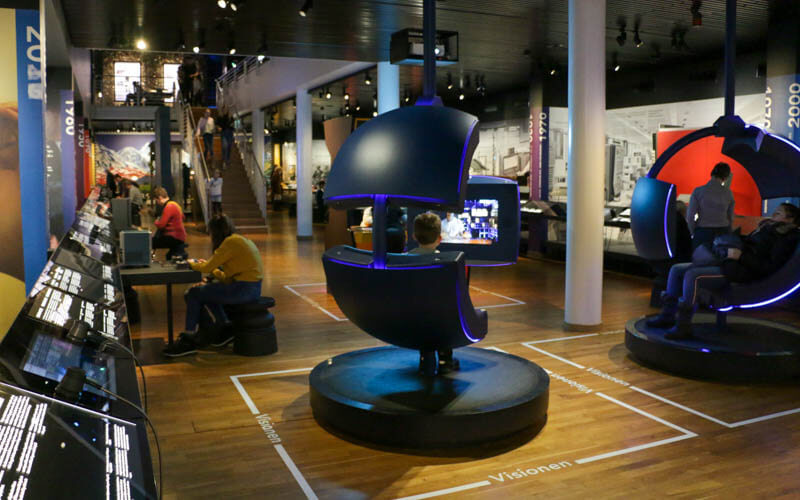
The museum is huge and has lots of artifacts related to different modes of communication. They are accompanied by lots of multimedia touch screens so you can learn a lot if you want to spend time reading and listening as you go. As you can imagine, my kids were more interested in jumping from one game to another. But while they were playing, I learned a lot browsing through the exhibits.
Special exhibit: Inhibitions
The top floor of the museum has rotating special exhibits. When we were there in Dec 2019, the theme revolved around inhibitions and social norms. It felt more like an interactive art installation than a museum, which was cool but also a little confusing. It definitely felt more geared to adults though some aspects were fun for kids. This special exhibit was not in English, only German and French.
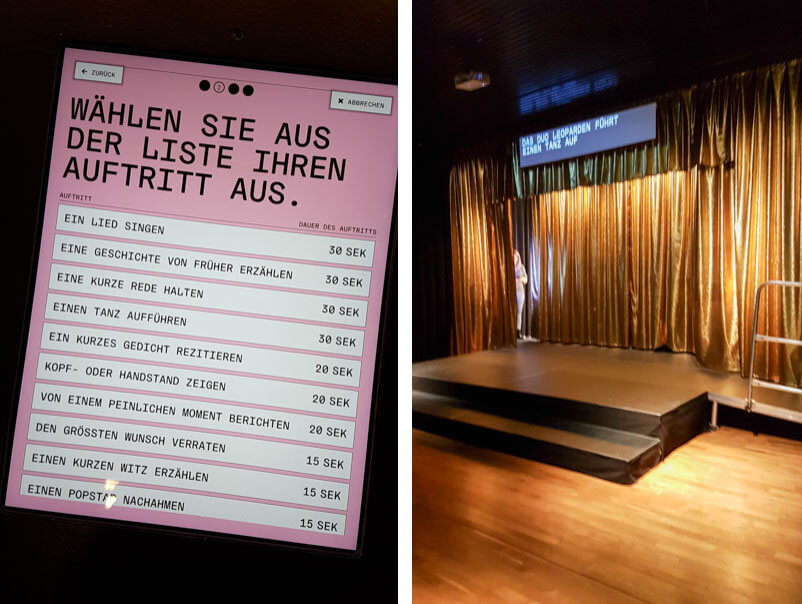
One part had a stage where museum visitors could perform. You enter a prep room, where you indicate what you want to do on stage, like throw kisses to the audience or tell a joke or simply run past the audience without being noticed. After a quick countdown, you walk through a doorway and you are suddenly on stage with bright lights and an audience of other visitors waiting for you to perform. Everyone laughs at your surprise. Some people do a little dance or bow. Then you can sit in the audience and watch other unsuspecting visitors also walk out on the stage. Little kids loved performing and getting applause from the audience.
In this room, you consider questions like “Do you lie?” or “What have you stolen?” and write your answers on the wall.
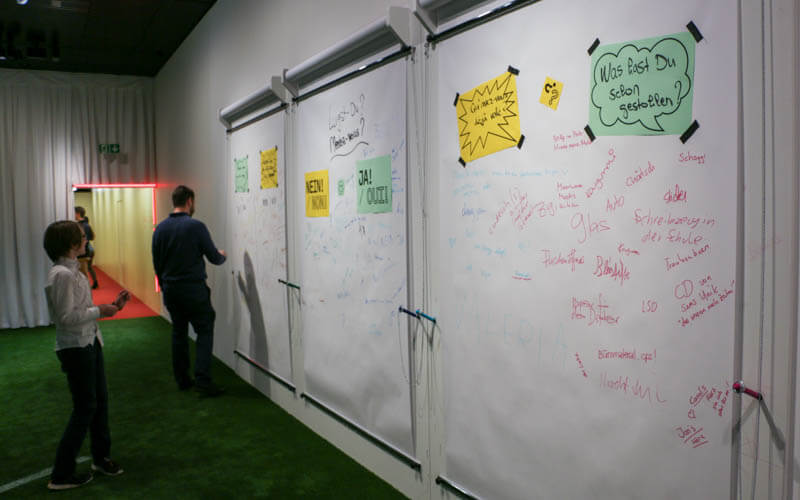
Part of the exhibit was sexual in nature, so I hurried the kids past that. There was one closed room labeled 18+ only. Make sure your kids don’t accidentally go in there.
At one point, there was a free bubble gum machine, then at the end of the exhibit, you were supposed to stick your chewed bubble gum to the wall. My kids loved that part, of course.
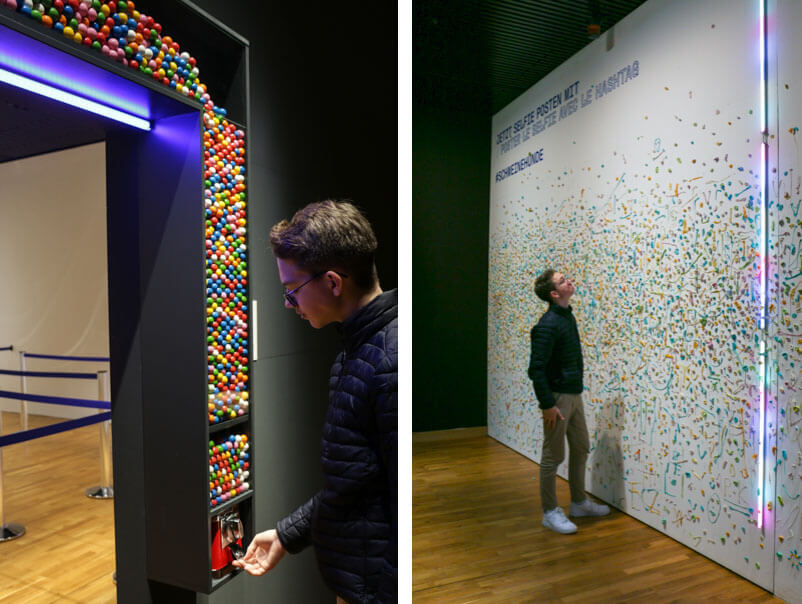
These tables had you rank how comfortable or uncomfortable social interactions are based on how well you know the person. Interactions might be “say you don’t like a gift” or “cancel an appointment” or “argue in public”. The people might be classmate, dentist, postal delivery person, sister. As you change the person, you re-rank the social interactions on the scale. I thought this was fascinating and something my kids hadn’t previously thought much about. So we had some interesting discussions.
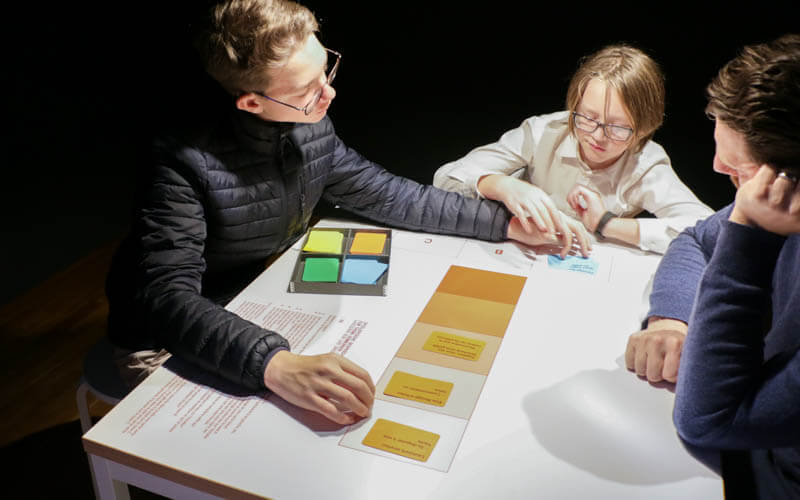
Services
Strollers and wheelchairs can navigate each floor of the museum and there is elevator access between floors. There are free lockers at the entrance for jackets and personal items.
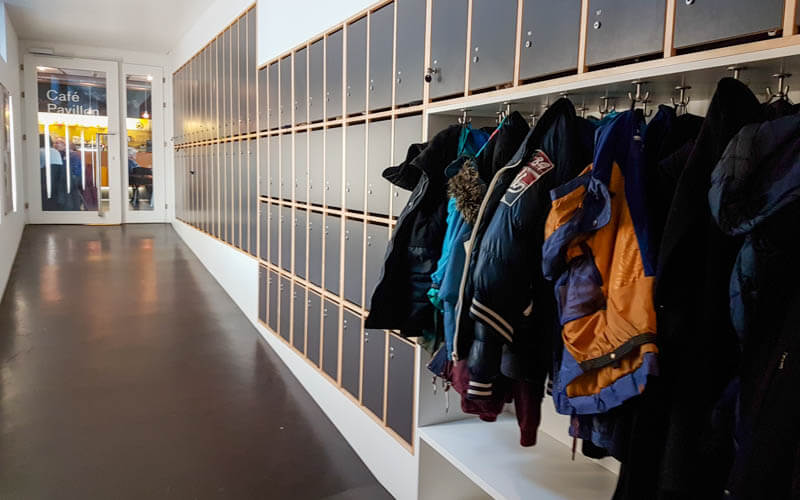
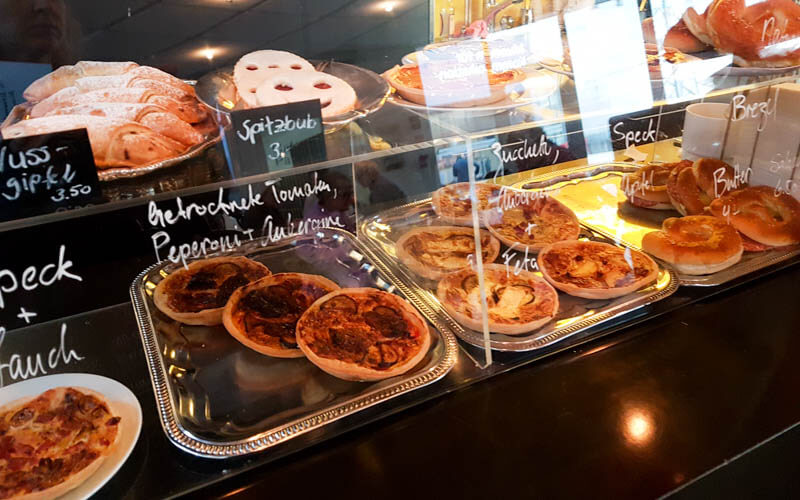
There is a cafe at the museum entrance. They lots of drinks, snack items like chips & candy, and a small selection of sandwiches, sweet and savory tarts and cakes. Just outside the museum entrance, there is an outdoor picnic area with chairs and room to safely run around.
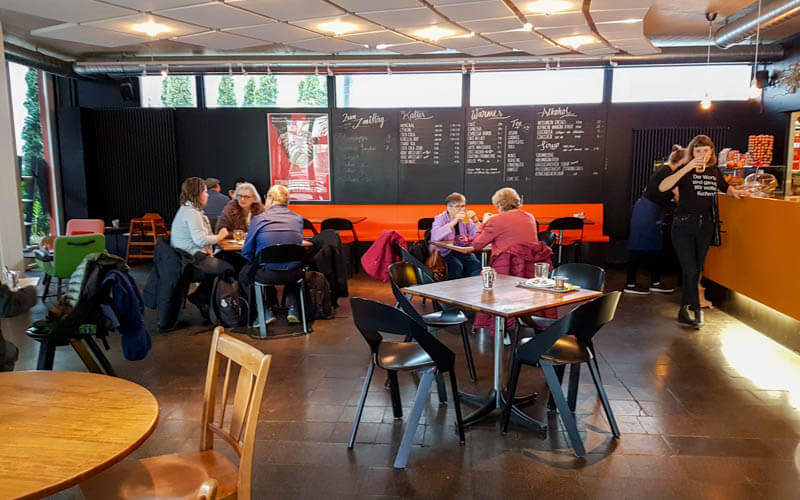
I was happy to find that the food was a step up in quality from most other museum cafes. The feta aubergine quiche and chestnut cake I had were quite delicious.
The gift shop has lots of fun books and games on the communication theme, but everything I saw was in German.
Other museums you might like