All over Switzerland you’ll find dormitory style group houses available to rent for groups, for as little as a dozen guests to over 200. These are called a variety of names like “Lagerhaus,” “Gruppenhaus,” “Ferienhaus,” “Naturfreundehaus” (aka nature friends house), “Gruppenunterkünfte” and “Jugendherberge” (aka hostel). They provide simple bunks for sleeping, shared bathrooms, and a group dining room with a big industrial kitchen. It’s a fun and affordable way to stay in the most beautiful parts of Switzerland with a group.
These houses are often used for school camps, social and sport clubs, hiking groups and family events like birthdays and weddings. Our children have done this many times with school. As a family, we have stayed in a Lagerhaus for ski weekends and Easter breaks with a large group of friends. We stayed in one as part of a wedding.
I’m sure there is a lot of variety in what group houses offer, but here’s some general info based on our experience.
See a video of our latest Lagerhaus trip at Stoos
Booking a Lagerhaus
It’s helpful to browse group houses to get a feel for what’s available. These websites are a good place to start:
- www.gruppenhaus.ch (in English)
- www.naturfreunde.ch
The listing will give very detailed info for exactly what facilities and services are available at the property. Here is one example:

Most tourism offices have accommodation brochures, which include listings of group houses, many of which are not advertised online. Tourism offices can also be helpful in connecting you directly with a suitable house given your requirements.
If you have particularly requirements, in terms of location, facilities and/or costs, it’s best to book these as far in advance as possible. Our group often books these one year in advance to make sure we get the one we really want.
Cost
There is a wide variety with cost, depending on the type of facilities and services the group house offers. Obviously, the least expensive option is when you cook and clean yourself and bring your own linens. I’ve seen houses like this rent for little as CHF 12/person per night. But if you include meals, you’re looking at more like CHF 60/person per night.
Usually the cost is per person, withe price varying by age: adult, youth, older children, and younger children, with under 3 free. For example, an adult might cost CHF 25/night and an 8 yr old CHF 12/night.
Other houses have a fixed price per night, regardless of the number of guests. Some houses include all extra costs in the fee. Others list fees separately like tourist tax, electricity, use of kitchen, linens, cleaning, etc. Make sure to look over the conditions carefully before booking.
Sleeping arrangements
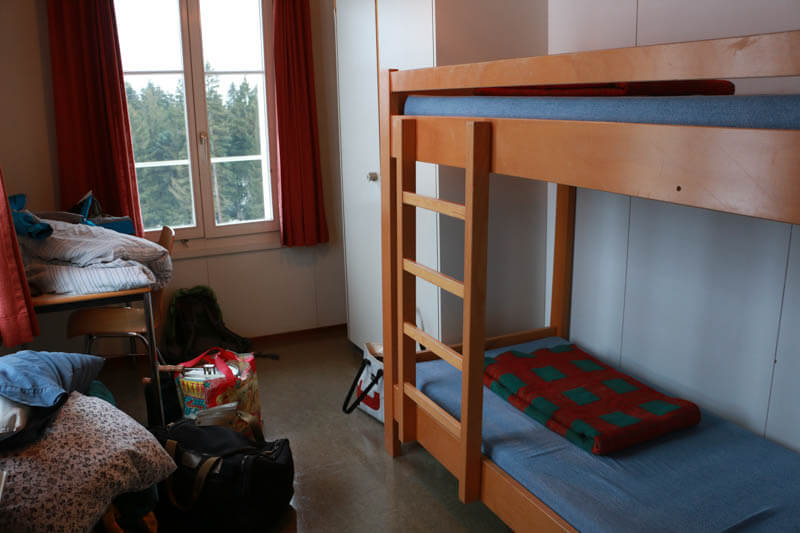
group houses typically have lots of rooms with bunk beds or rows of mattresses on the floor. Typically there are different sized rooms, some with long rows of bunks with 12+ mattress, some with just 2-4 bunks. We usually have the older kids and teens bunk together in the bigger rooms and have couples and families with small children have the smaller rooms.
Linens
Each bunk comes with a mattress and pillow. You will need a pillowcase, fitted sheet and a blanket/duvet or sleeping bag.
Some houses include the linens in the rental fee. Others charge extra for linens, with the option to bring your own. We typically bring our own linens to keep costs down. Instead of a blanket, everyone brings a sleeping bag, which is easier to transport.
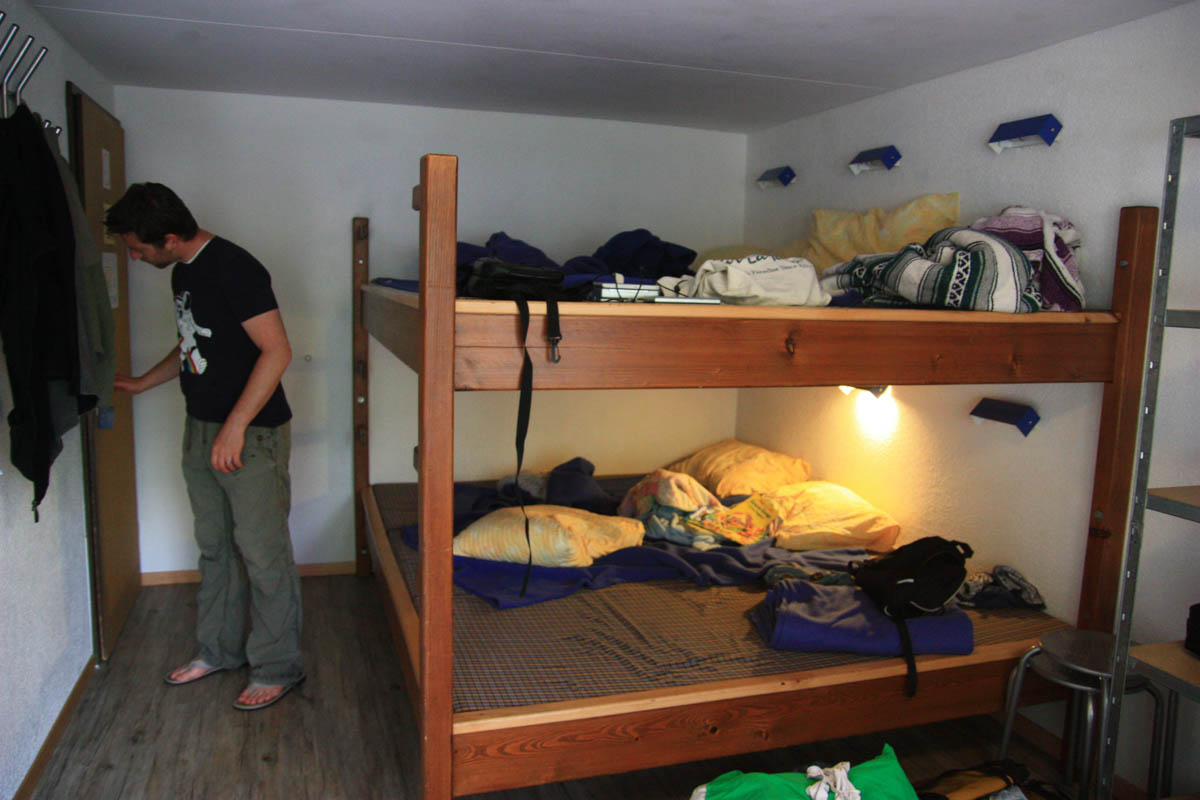
At our last Lagerhaus, most everyone brought their own linens, but there were linens available on site to rent for anyone who forgot or didn’t want to bring their own. I think it cost CHF 3 for a sheet and CHF 6 for a duvet. We just paid that extra linens rental fee at the end of our stay.
Power
There is typically at least one power outlet in each the room, but maybe not more. So if you have a lot of things to plug in, make sure to bring a power cord.
Usually there is just one overhead light, rarely individual lights for each bunk. So if you want to read at night, bring a small personal reading light just in case.
Storing your stuff
The rooms usually don’t have a lot of extra space for stuff, but just small cubbies (no lock) for personal belongings and hooks on the wall for jackets. Sometimes there is enough room to slide suitcases under the beds, but often luggage is stacked high creating a mess. Best to pack light.
I’ve never seen cribs provided by the houses. If you are bring a baby or toddler, you may want to bring a portable crib or other portable sleeping solution. Also, the bunks do not have bumpers to prevent you from falling off. We’ve had lots of kids fall off bunks, playing and sleeping. Best to put children on the lower bunks to avoid serious injury.
Bathrooms
The bathrooms are shared facilities, usually one or two on each floor. We typically tape a sign on the door of each bathroom designating some for women and some for men to avoid awkward moments.
We’ve seen all sorts of shower situations, large rooms with individual curtained stalls, large open rooms with multiple showers, single shower rooms with a dressing area and one shower. When we have open shower rooms, we have designated “shower times” by gender or family.
Remember to bring your own towels, including hand towels and bath towels (I often forget and have to borrow, whoops!).
What to pack
Besides whatever clothing, toiletries, and comfort items you need, here are a few things not to forget when staying in a Lagerhaus:
- house shoes
- towels – hand towels and bath towels, which are not provided by the house
- power cord
Transporting Luggage
In some cases, we could drive and park directly at the Lagerhaus. In other cases, we parked in the valley and rode a cable car to a car-free village and walked to the house with our luggage. Make sure to check the distance you need to walk to the house and pack accordingly.
Some of the houses have provided handcarts or wagons so we could more easily transport our luggage from cable car station to the house. Usually these hand carts are simply stashed at the front of the house or in a storage room. It’s worth asking ahead of time about this.
Some cable cars have luggage carts that you can wheel to your car, load your luggage, then wheel directly onto the cable car. Typically you leave the cart at the top station and carry your luggage to your house.
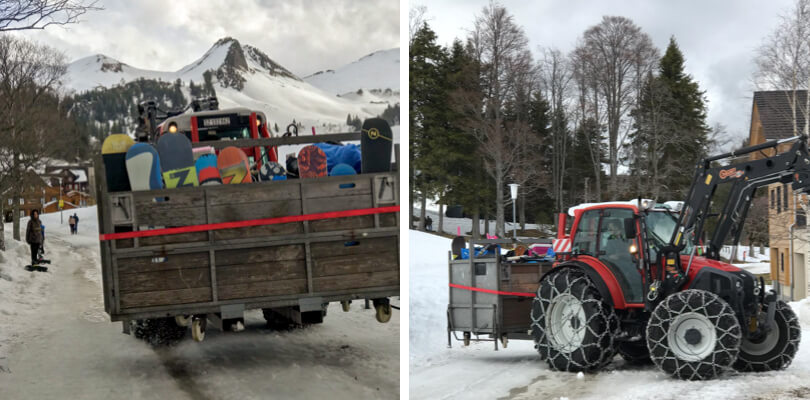
In some villages, you can pay for a luggage taxi, which is best to arrange ahead of time (like the day before). This can be very helpful, especially if you are transporting food in addition to luggage. For example, at Stoos, our luggage taxi brought a huge wood box to the house. We loaded it with everyone’s luggage and a big tractor pulled it to the funicular station, where they loaded the box directly onto the funicular. In the valley, they placed the box in the loading area so everyone could bring their cars around and retrieve their luggage.
Play Time
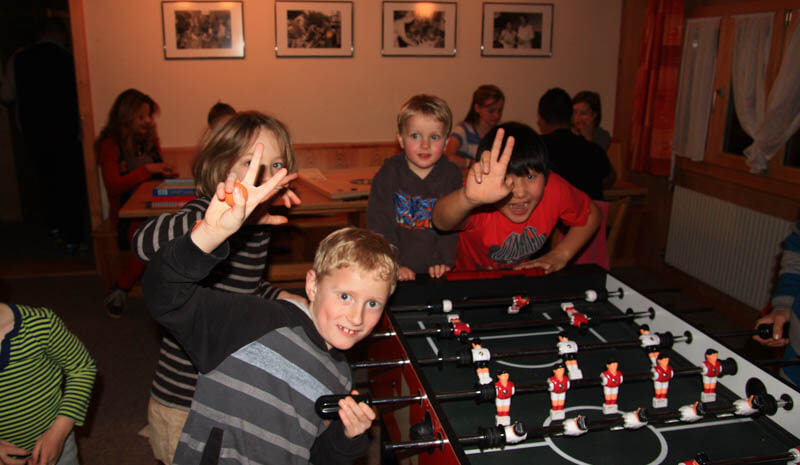
Every house we’ve stayed at had a play room with either a ping pong table or foosball table. We always bring our own ping pong paddles and balls as those are never provided. One house had a closet with some board games, but that was unusual.
If you are going in summer, the group house usually has an outdoor garden with picnic tables and grill, sometimes with outdoor ping pong tables or small playground. These should be mentioned in the description when booking the house.
Looking for the best online services?
Explore top-rated platforms and secure your discount before it expires.
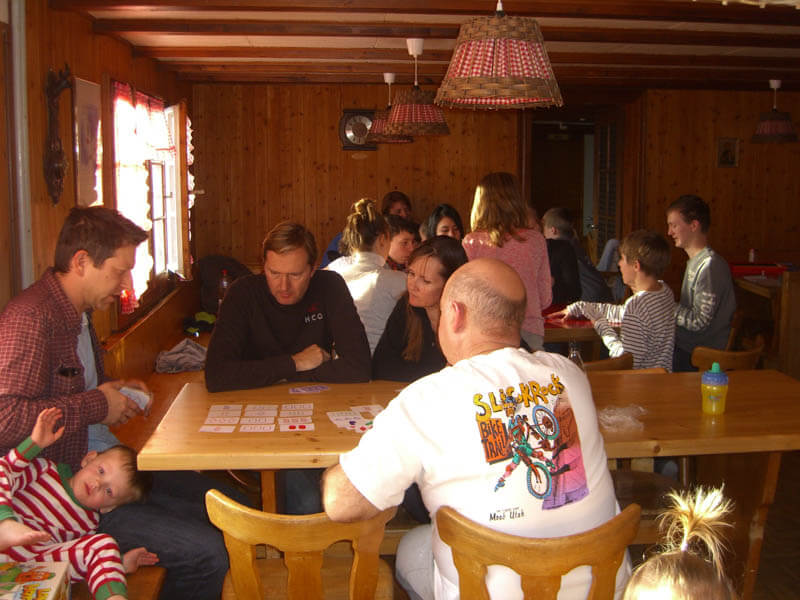
Most of the houses we’ve stayed at did not have a common area for lounging, just the dining room and play room, which are not so comfy. Some people hang out together in the evenings, but without a comfy lough, often people go back to their rooms to lay on their beds instead. After browsing the rental listings, I saw that some houses do advertise a lounge, which would be a priority for me if I was organizing the event.
Cooking at a Lagerhaus
Some group houses provide meals. In the ad, this will be noted as Halbpension/Vollpension (half and full board). For some houses, this is required and they do not provide access to the kitchen. For others, this is optional but they might charge a fee for using the kitchen.
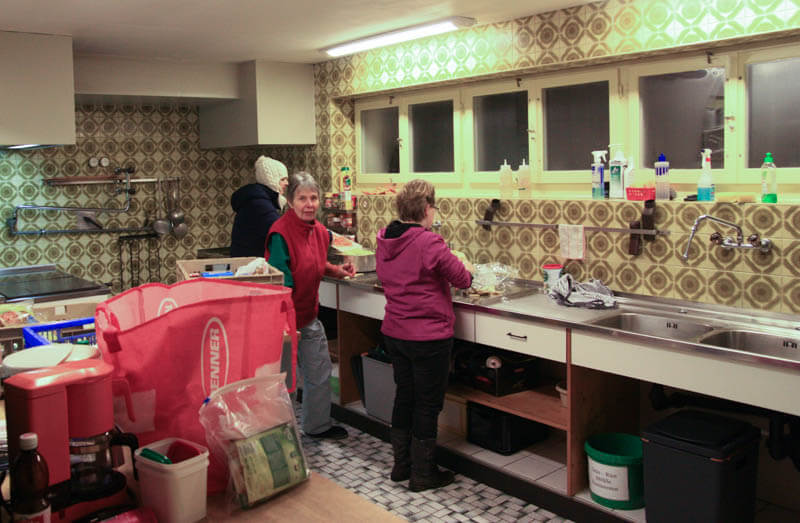
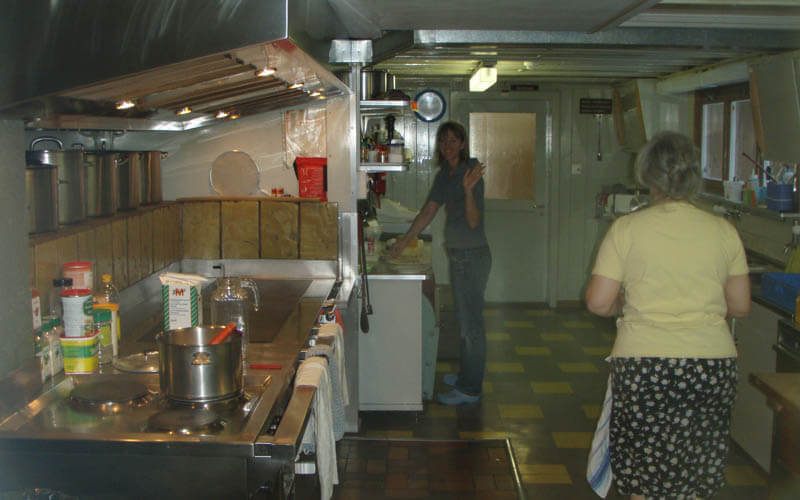
Some group houses are only self-catered, aka “Selbstkocher” in German. If you are cooking yourself, you’ll need to bring food and disposable cooking supplies like paper towels and dish soap. The kitchens are usually well stocked with all the equipment you might need, pots, pans, utinsils. But I always bring my own chef’s knife and some dish towels just in case.
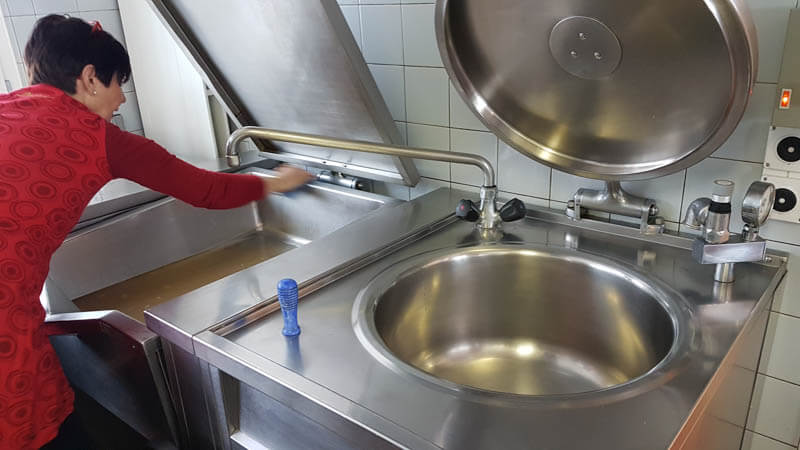
Check the descriptions carefully so you know what facilities are available. We stayed in one Lagerhaus that had a fire powered stove, which was crazy trying to keep an even heat going.
What we typically eat
Obviously, you can cook whatever you want. But here’s an idea of what we typically eat with big groups. We go with Swiss friends and the ones organizing the kitchen usually have experience cooking at school camps and do the same sort of menus. If you do self-catered, remember to get lots of hands to help so one or two people aren’t stuck in the kitchen the whole time.
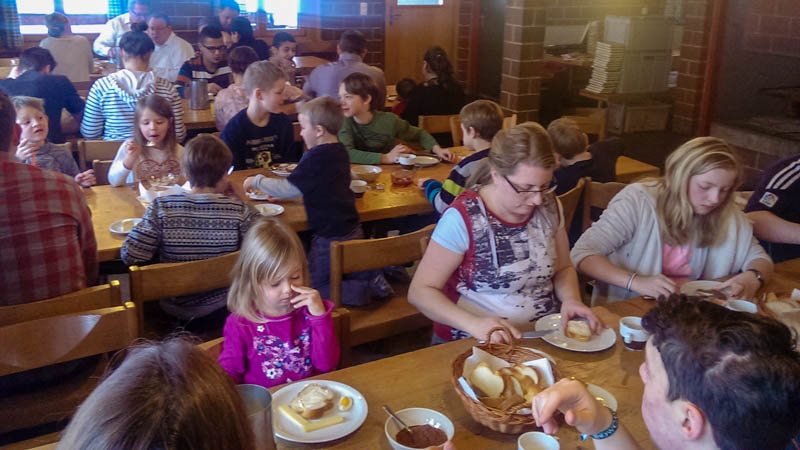
Breakfast
- Sliced bread (on Sundays, it’s always Zopf), with butter, jam, honey and nutella
- An assortment of cheese
- Yogurt and sometimes muesli to mix in
- Fresh fruit
- Juice and hot chocolate
- Sometimes cold cereal with milk
Lunch
We usually have picnic lunches to take on our activities, typically hiking or skiing. So the cooks set out a variety of supplies for people to assemble their own picnic lunch, typically sandwich stuff, veggie sticks, fruit, individual snack packs of chips, chocolate bars. For ski camps when the house is very close to the slopes, we often have a hot lunch at the house, either pasta or soup. But that means someone has to stay behind and cook if you are doing self-catered.
Dinner
Since people don’t all arrive at the same time, due to work and school schedules, the first night, we always have a simple soup, like a veggie soup with hot dogs for the kids. This makes it easy to keep food hot for late arrivals.
Other dinners are the obvious easy choices, what you would typically find at a mountain hut, like spaghetti bolo or curry with rice, always starting with a simple green salad. When I was in charge, I cooked chili with baked potatoes and coleslaw, which was a welcome change.
Mud room
Every Lagerhaus has a mud room, where you are expected to leave your dirty shoes. Remember to bring house shoes to wear inside the house. The Lagerhaus usually does not provide house shoes like mountain huts.
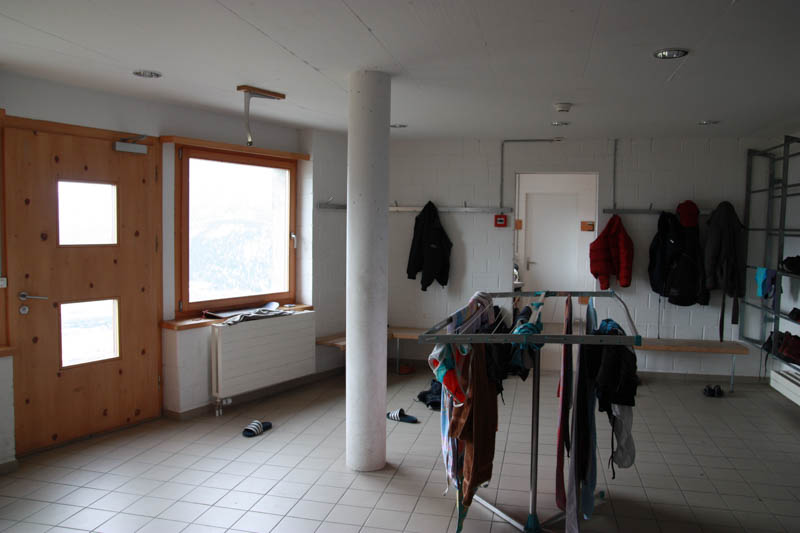
If you are skiing, the Lagerhaus usually has a place to store ski equipment and sometimes racks in the mud room to hang wet outer gear to dry.
Cleaning
Some group houses offer a cleaning service, some included this in the price, others charge an extra fee. Make sure to verify this when booking.
If they don’t include a cleaning service, the house typically provides cleaning equipment and supplies, including vacuums, mops, cleaning rags and cleaning solutions. But verify this with your house before arrival. You are expected to clean the entire house, including vacuuming and mopping all rooms and public areas, wiping down surfaces in the bathrooms and kitchens, and cleaning toilets. You will typically do a walk-through with the host at the end of your visit.
Many hands make light work
If you choose self-catered, it’s important to organize people to help with all the work. With very large groups, we divide everyone into teams and rotate assignments for each meal:
- Dining Room Setup – set the tables and carry food from the kitchen
- Kitchen Work – prepare food in the kitchen under the direction of the chef
- Dining Room Cleanup – clear tables, wash dishes, put clean dishes away, wipe tables
We usually split family members across teams so a) you get to know your friends better, b) the whole family isn’t busy at the same time, and c) kids tend to work better with friends than with their own family. Here’s everyone helping out in the kitchen and setting the tables.
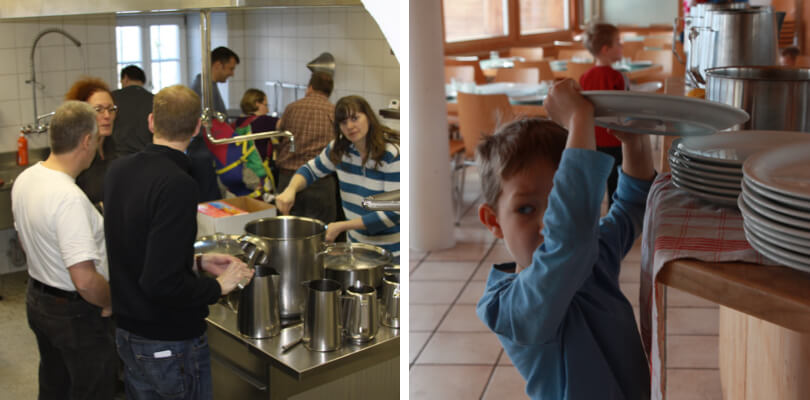
Of course, it depends on the size of your group and group dynamic. We did one self-catered vacation with four families and simply assigned one family to each meal (on a rotating basis) and everyone else helped with setup and cleanup.
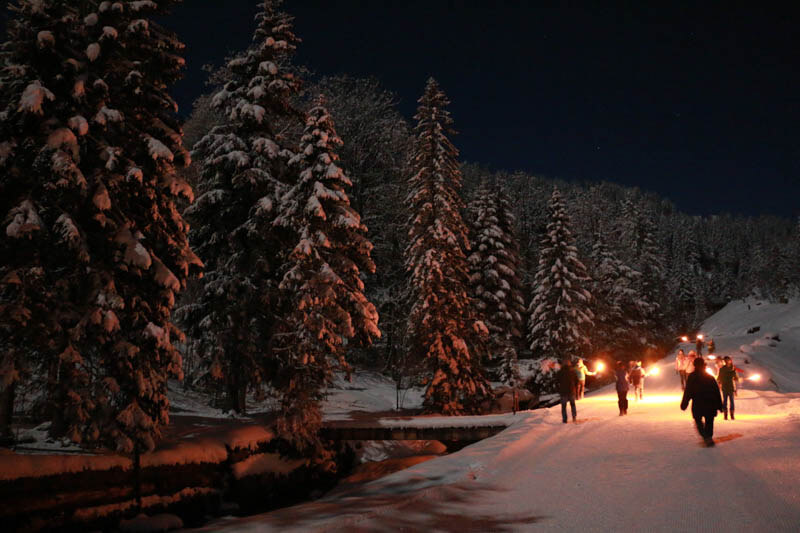
Traditions: Fire Walk
One of our traditions is to do a fire walk with torches the first night of the camp. You can get these hand torches at a big Migros, Coop Bau & Hobby, or Jumbo near the grilling equipment. I highly recommend it!
Sample Houses
Here are some of the houses we’ve stayed at.
Stoos – We stayed at Sennhütte, conveniently located right next to the ski school and magic carpets and a short walk to the ski lifts. You have to first ride a funicular to reach the village, the walk to the house. You can order a luggage taxi if necessary. The ski resort has something for everyone, from toddlers to advanced, see my review here.

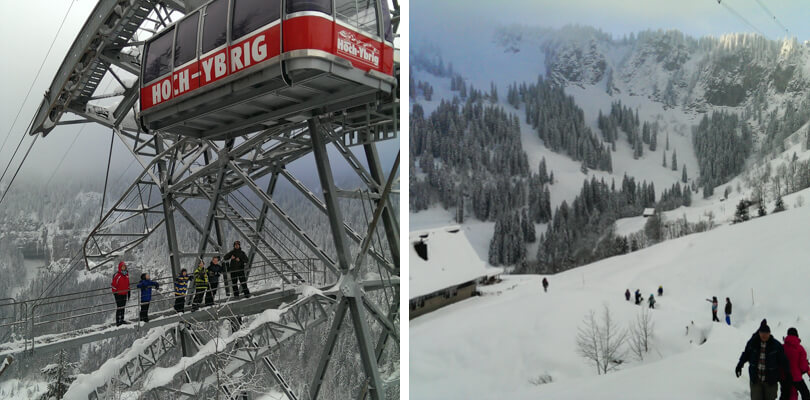
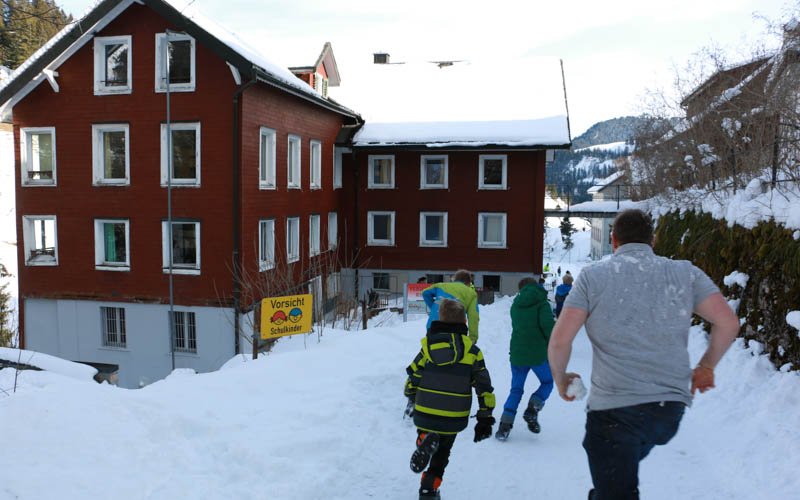
Hoch Ybrig / Gruppenhaus Alp Wang – This was the most memorable location because we had to exit the cable car at the mid station tower. They lowered a metal walkway to connect us to the tower. Then we walked down a bunch of metal stairs with our luggage to reach the path. Then an 800m walk through the snow to our house. Not very convenient, but everyone loves the memory of this. We left our ski equipment in the cars in the valley station and picked it up in the morning before going back up to ski. We really like the ski resort, see my review here.
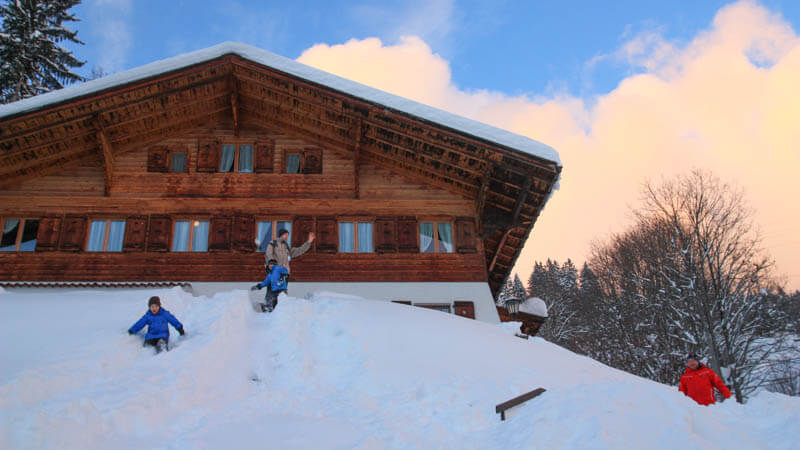
Rigi / Ferienhaus Rimona – This house was formerly a convent and converted into a group house. It’s a short walk from the Goldau-Rigi mountain train. The house provided wagons to transport our stuff. The ski and sled runs are on the hills above the house, easy to access with the train. The ski resort is very small, with just a couple T-bars, but I was surprised how much fun our group had. There are lots of other activities for non-skiers, which was one reason we picked this location. About half of our group went sledding. I went snowshoeing with a couple friends. I even did a midnight moonlight winter walk. It was one of my favorite trips.
Beatenberg / Naturfreundehaus Beatenberg – This house had fantastic views over the Berner Oberland region. The ski resort is quite small and mostly T-bars, but we had lots of fun here. The house is a bit too far to walk from the gondola, so we drove just 2 mins and parked next to the lift.
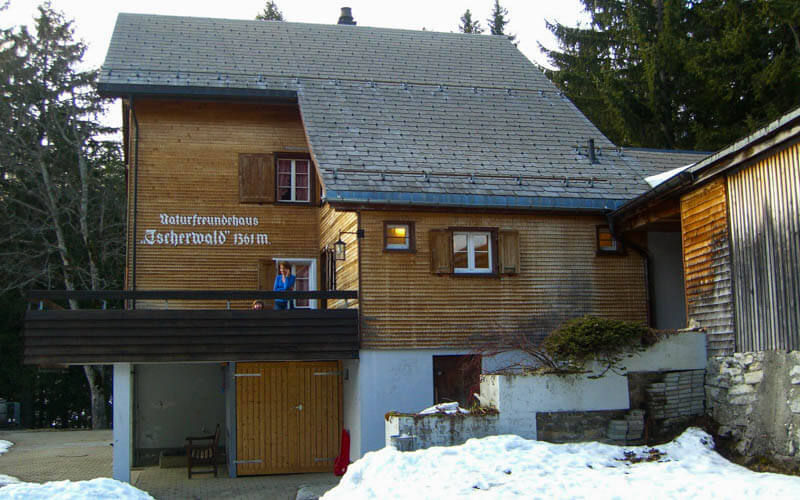
Amden / Naturfreundehaus Tscherwald – This cosy house was adorable and has wonderful views once you walk out of the forest. But not the best for a ski holiday. It’s quite far from the ski hills, so you have to drive (only 5 mins). Also, this area is quite low elevation and gets direct sun all day. So it often doesn’t have good snow or any snow. Better for a spring or summer getaway.


One Response
Love looking at your pictures! It reminds me of the huts we stay in with the Appalachian Mountain Club.