One way to travel more cheaply in Switzerland is to make smart choices about where, when, and what you eat. Based on our family’s experience living and traveling in Switzerland since 2005, here are 10 ways to save money on food during your Switzerland trip.
1. Bring a picnic
Restaurants are infamously expensive in Switzerland, a simple meal of pasta costing CHF 25 or more. And honestly, at most casual restaurants, the food is not amazing. Unless you are going to a very nice restaurant, your meal is rarely worth the high prices.
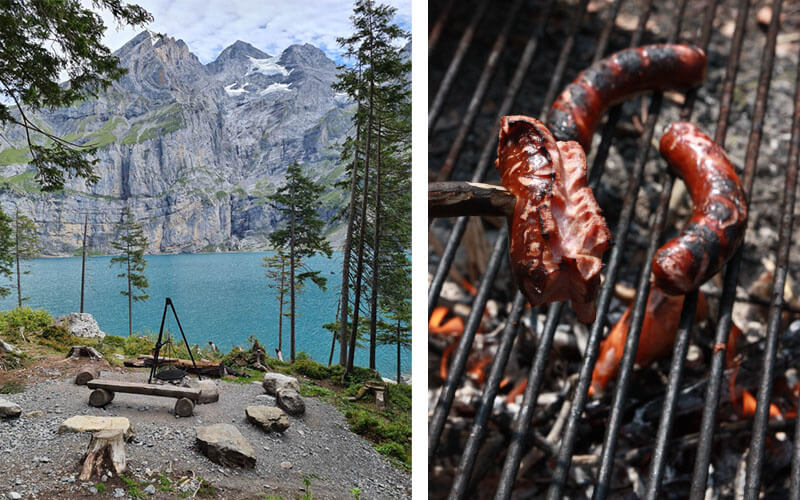
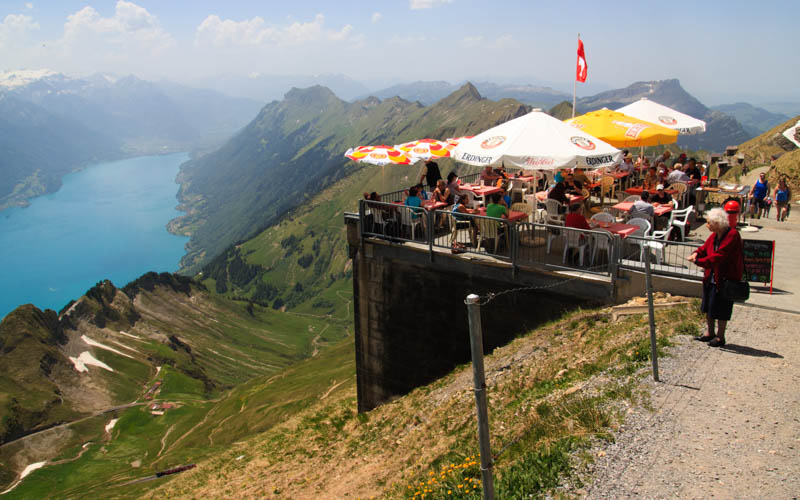
The most obvious and easiest way to save money on food is to picnic instead of eating at a restaurant. Although it’s nice that most Swiss hikes have mountain restaurants so you don’t have to carry any food, those meals can cost you about CHF 25-35 per person. So for lunch, our family usually picnics.

Many Swiss hikes have official picnic areas with tables and fire pits, so it’s comfortable and easy to eat in nature. Many picnic areas are near playgrounds, so the kids can amuse themselves while you build the fire. The fire pits usually have wood, so you just need to bring matches and your sausage. The free hiking maps provided by the resort usually mark the picnic areas either with a table or fire icon.
2. Eat out for lunch, instead of dinner
If you want to sample local flavors, lunch is usually a more affordable time to eat than dinner. Some restaurants have cheaper prices for the same dishes at lunch time. Many offer fixed price lunch specials that include a salad starter and dessert.
3. Drink tap water
Drinks are ridiculous expensive in Switzerland. At a kiosk or restaurant, expect to pay at least CHF 5 for a soda, bottled water, or coffee. Beer isn’t much more but cocktails can be shocking pricy at CHF 15-20. At the grocery, bottled drinks are cheaper but still about CHF 2 for 500ml.
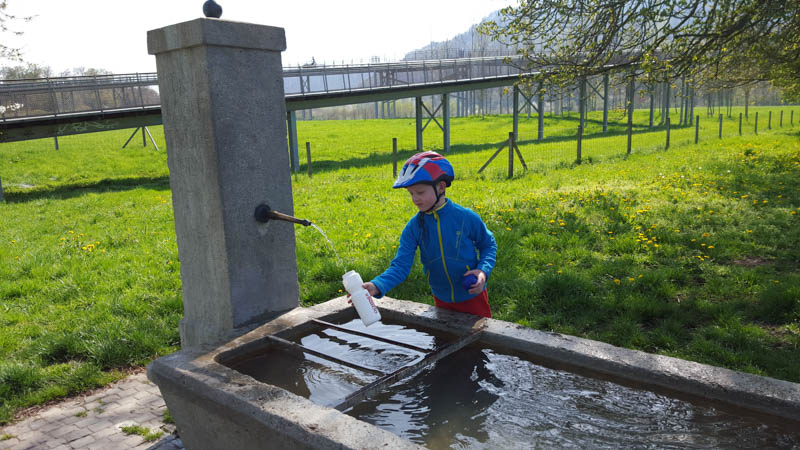
Tap water is safe and delicious in Switzerland. Most cities and villages have many fountains with drinking water free flowing. Unless the foundation has a sign that says “Kein Trinkwasser,” you can drink that water. So definitely bring a reusable bottle and fill it up frequently on your travels.
In restaurants, you can request tap water, called “Hahnenwasser” or “Leitungswasser” in German. If you just ask for water (aka “Wasser”), they usually come back with bottled water. So make sure you very clearly ask for “Leitungswasser.”
Note that some restaurants will still charge a small fee to cover washing the glasses, usually CHF 2/glass or CHF 5-8 for a 1 L bottle. But usually they will inform you when ordering or it is clearly stated on the menu.
Also, mountain huts do not have drinkable tap water because they are too remote. All drinks must be helicoptered in and, therefore, are even more expensive.
4. Don’t leave a big tip – service is included
Swiss restaurant prices include a service fee. So the Swiss do not leave a huge tip, but usually round up, giving the server a couple extra francs. On a bill of CHF 57.50, I would just round up to CHF 60. Feels weird for an American, but it’s totally normal.
If you do the math, subtracting a 20% service fee from your bill, you might find that the meal wasn’t quite as expensive as you imagined. I always think it’s cheaper to eat out in America. But last time I visited, I was surprised how expensive it was once you add in a 20% tip, as expected at many places.
5. Eat vegetarian
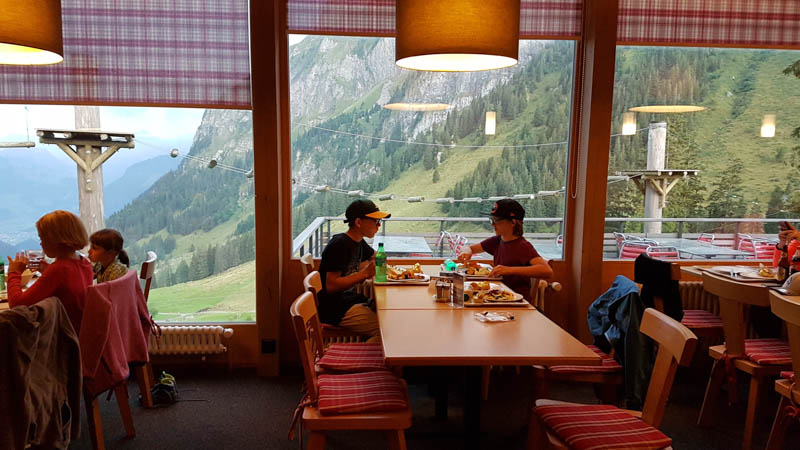
Vegetarian options are available at most Swiss restaurants, even mountain huts, and are usually much more affordable than meat items. Most menus include salads, plain rösti (no speck/bacon) and cheesy pasta. These are usually more affordable, maybe CHF 15-25/dish instead of CHF 28-35.

6. Meat eaters – order sausage, not steak
At a restaurant, a main dish with steak may cost CHF 35-50. As you might imagine, we rarely eat steak, either dining out or at home. If you like eating meat, it’s more affordable and common to eat sausage, like bratwurst, cervelat and local specialties.
Also, many Swiss dishes use a small amount of meal to flavor the meal. So your rösti may be topped with bacon or your cheesy pasta sprinkled with speck.

Most Swiss restaurants have a kids menu for 12 and under. It’s not always super cheap but it’s certainly more affordable than a regular meal.
Kids menus are usually have similar options like chicken nuggets, schnitzel and pasta bolognese. A kids mean usually costs between CHF 9-15. Sometimes it include ice cream for dessert. Although kids menus usually state for age 12 and under, most restaurants are not super strict about this. My teens sometimes still order off the kids menu if they want a smaller portion.
8. Takeaway
Many Swiss villages do not have casual restaurants for a quick inexpensive meal. If you sit down, expect spend at least an hour at the table and pay about CHF 25-35 per person even if the food is very casual. A cheaper, quicker way to eat is takeaway, but Switzerland doesn’t have as many takeaway options as you might be used to in other countries.
The most popular takeaway option in Switzerland is kebabs. You’ll find a kebab stand practically in every village, often near a train station. They aren’t always great, but they are fast and cheap, usually about CHF 8-11.
Pizza can be a good choice, but not necessarily super cheap. Expect to pay about CHF 18-28 per 30cm pizza. We end up ordering a lot of pizza on our Swiss holidays to avoid sitting in a restaurant for two hours. Not every pizza place is good or cheap, so be a little picky, reading some online reviews before selecting a pizza joint. We’ve had a lot of bad pizza over the years.
Many villages have “Asian” takeaway but it’s usually pretty average and often expensive. Most “Asian” restaurants in Switzerland do not serve authentic flavors and often sell multiple cuisines (Chinese, Thai and Indian) all under the “Asian” moniker. Expect to pay about CHF 18-25 per dish.
9. Skip the hotel breakfast
Most hotel and B&B accommodations in Switzerland include breakfast in the overnight price. This can make your travel more efficient because you don’t have to worry about shopping or store opening hours (open late and close early in small villages).
But if you don’t mind getting a breakfast on the go, you might be able to save some money opting out of the breakfast option. Not all hotels will allow this but it doesn’t hurt to ask. As a comparison, a hotel breakfast might cost CHF 15/person. But you can get a croissant and coffee for about CHF 7.

Note that many hotels in Switzerland do not have a mini-fridge. So don’t expect to be able to store groceries in your room.
10. Self-service cafes for a sit-down meal
If you want to sit inside for a meal but don’t want to spend a lot of money, try the self-service cafes of grocery and department stores. Large groceries like Migros and Coop and department stores like Manor typically have a self-service cafe with sandwiches, salad buffet, hot dishes and snacks. It’s not amazing food, but it’s quick and relatively inexpensive.

Tip: Be careful on the salad buffet!
Many self-service Swiss restaurants have a salad buffet, where you pay per 100g (usually around CHF 5/100g). I’ve never seen so many shocked faces as the customers at the cash register who realize that a tiny bit of salad is going to cost them CHF 25! There is never a scale near the buffet so you can’t test how much your plate weighs before taking more food. Be careful!
Extra credit: Soup, the cheapest meal
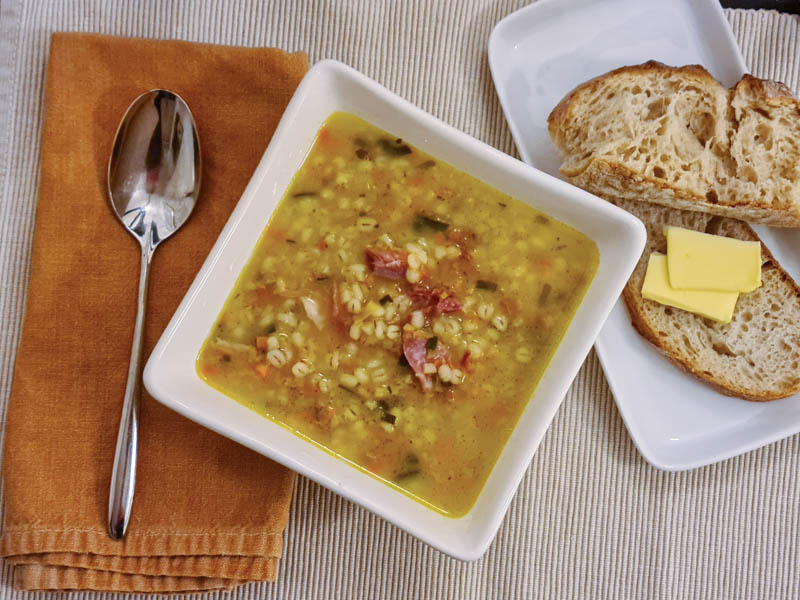
One of the most filling and affordable meals at mountain restaurants is soup. One of the most common in eastern Switzerland is Gerstesuppe, aka barley soup. I eat this soup all the time, especially during ski season. It usually costs about CHF 8-12 and comes with a piece of bread. This is my go-to meal when my budget is tight.
See my receipe for Gerstensuppe.
FAQ
How much should I budget for food in Switzerland?
If you eat out every meal during your Switzerland trip, I would budget about CHF 25-35 for lunch and CHF 40-50 for dinner per person including drinks.
If you picnic, I would budget about CHF 10-15 per person per meal.
Where are the cheapest grocery supermarkets in Switzerland?
The main supermarket chains in Switzerland are Migros and Coop. These stores carry a large selection of high quality products. But there are several cheaper food grocery stores including Aldi, Lidl, Denner, and Volg.
For picnic supplies, we often shop at convenience stores at train stations and gas stations near our destination. These convenience stores usually have a surprisingly decent selection of local cheeses and sausages to grill, fresh sandwiches, and fresh produce. Or we buy sandwiches at a bakery near our destination.
Note that grocery stores in small villages often have limited hours. They may close over lunch (12:00-13:00), on weekdays around 6pm, on Saturdays at 4pm and closed all day Sundays. But many gas stations and train stations have groceries that are open longer hours and on Sundays. I’m a bad planner, so I’m often shopping at the gas station late Saturday night.
How much does food cost in Switzerland?
Groceries in Switzerland may be more expensive than in your home country, particularly for meat and dairy. Expect to pay about CHF 15-25/kg for cheese, CHF 22/kg for ground beef, CHF 36/kg for chicken, CHF CHF 55-80/kg for steak (about $30-40/lb).
In Switzerland, the main grocery chains are Migros and Coop. You’ll also find budget chains Aldi, Lidl, and Denner that carry many of the same products at cheaper prices. Small villages will have small grocery like Volg and Voi where prices can be high and selection is limited. So it can be better to shop in larger towns that have bigger grocery shops.

Are farmers markets cheaper than shopping at grocery stores?
Prices at farmers market are usually higher than at the grocery, so don’t expect to get a bargain.
Do holiday apartments typically stock food basics?
Many holiday apartments do not stock basics like salt, sugar, oil, coffee, paper towels, dish soap, etc. So make sure to take inventory before going shopping and include those staples in your budget.


6 responses
Going on the Golden and Bernina train early this November. Thanks for the tips.
Wishing you a wonderful trip on these scenic trains. Make sure to carefully check the operating times for these trains, as sometimes there are closures for maintenance during November. Also make sure to book ahead to avoid disappointment.
Planning to do a road trip in July, this is so informative. Great tips. Thank you.
Great tips, especially for a first time visitor. Thank you.
I find this very, very helpful. Thank you so much for sharing your experiences and tip!
This was an outstanding read, very helpful. Thank you!!