Although Switzerland can be expensive, you can travel here on a budget if you make smart choices like choosing destinations with free guest cards and buying the right travel pass.
Some guides suggest saving money by only visiting free attractions, never riding cable cars, cooking all your meals at your apartment, and buying no souvenirs. But most travelers want a richer experience, visiting famous places, eating local food, enjoying fun amusements, and relaxing with convenience and comfort, even if you can’t afford luxury prices.
Based on my experience living and traveling in Switzerland since 2005, this budget guide focuses on ways to use your money most efficiently and how to avoid costly mistakes to make your Switzerland trip more affordable.
Contents
Where are the cheapest destinations in Switzerland?
1. Destinations with free Guest Cards
The best way to save money when traveling in Switzerland is to choose Many destinations offer free Guest Cards for overnight guest, which include free public transportation and discounts on mountain transport, leisure activities and entrance to museums (sometimes free!).
For example, in both the in the Saastal and the St. Moritz Engadin regions, overnight guests get a guest card that includes all mountain transport in the whole region – huge savings! Not all guest cards give such great benefits, but it’s worth looking into. Another example is Davos Kloster, which doesn’t give discounts for local travel cards like GA & Half-fare. So it’s more affordable for locals to spend the weekend to take advantage of their guest card.
See 12 Cheapest Destinations in Switzerland (using overnight guest cards)

2. Choose destinations with regional travel passes
Some Swiss regions have travel passes which cover public transportation and mountain transport. You can purchase these passes for 2 to 10 days depending on the pass.
You get the most value from these passes if you buy them for the maximum number of days. For example, the Tell Pass for the Lucerne region costs CHF 190 for 2 days (CHF 95/day) but CHF 320 for 10 days (CHF 32/day). There are so many mountains and attractions covered by the Tell Pass, you could easily fill up 10 days with so many amazing adventures.
See Best Swiss travel passes for budget travel in Switzerland
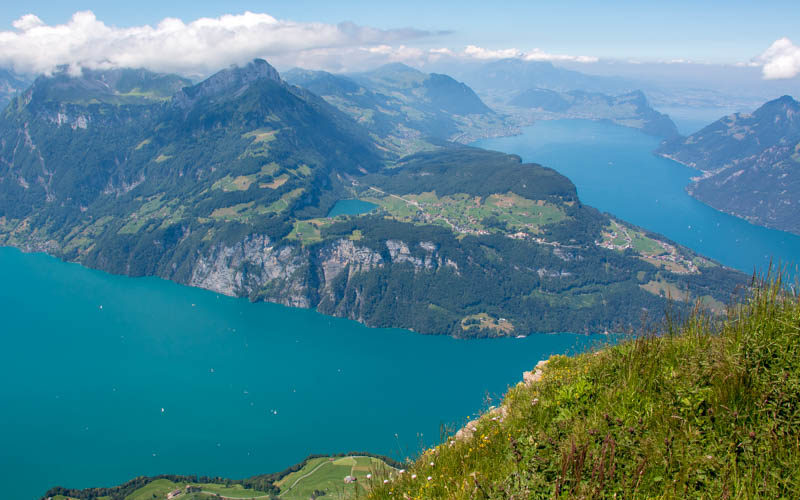
dozens of mountains near Lucerne are covered by the Tell Pass
3. Choose smaller and less popular destinations
Popular tourist destinations are expensive for a reason – demand! Everyone wants to go there, so the prices are high for everything: accommodations, food, and mountain railways. For example, the mountain train from Zermatt to the Gornergrat viewpoint is CHF 126 round trip in high summer. Those types of prices can be scary, especially for a large family.
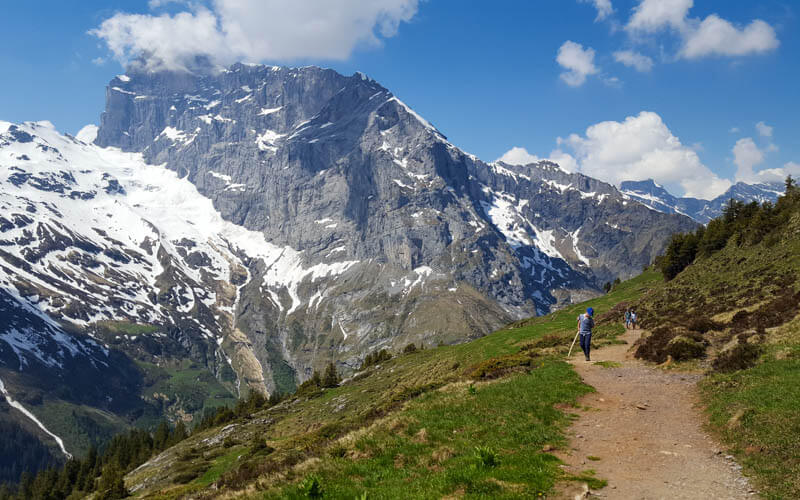
But there are dozens of mountain resorts that are much more affordable, with cable cars that cost around CHF 15-40/adult round trip, even without discount travel cards. Even in tourist destinations, there are usually much cheaper alternatives to the most popular and expensive routes, just as beautiful and less people.
What are the cheapest accommodations in Switzerland?
4. Youth hostels
In Switzerland, hostels are not just for young backpackers. Hostels are a budget accommodation option available to any traveler. Many cater to families, with private family rooms and fun activities for kids. Some have shared kitchen facilities so you can prepare your own meals. Most offer breakfast (usually optional) and sometimes dinner with a half-pension price.
Hostel usually have dormitories (aka “lager”), with lots of bunks in one room as well as single, double and family rooms. Some offer rooms with private bathrooms.

However Swiss Hostels are not necessarily super cheap. They can cost between CHF 45-120 per adult per night, depending on the season and room type. This can be affordable for a single traveler. But for a family, the price can get close to a regular hotel or apartment stay, with much less comfort. For example, a 4-bed family room in summer at the Pontresina hostel costs CHF 272.
See hostel accommodations in Switzerland on https://www.youthhostel.ch/en/
5. Book directly with hotel or apartment
If you find an accommodation you like on Booking.com, you might be able to save money by booking directly with the hotel. When you book direct, the hotel doesn’t have to pay the fees to the booking agent. We’ve done this a few times and saved a bit. Plus, I really like supporting small hotels this way, even if I end up spending about the same price as through the booking agent.
6. Rent an apartment for a week
Some apartments offer a discount for longer stays, particularly if you stay a full week. You also have a kitchen, so you can prepare meals at home instead of always dining out. Large apartments (like ones that sleep 8-12) often are the best value if you can split the cost with friends. Plus it can be more fun to share living spaces than each family getting a separate small hotel room.

We typically book apartments in Switzerland through the usual suspects: AirBnb and Booking.com . But there are still many apartments that aren’t listed online. You can find out about them through tourist offices, local travel brochures, and regional websites.
Tip: Pay attention to cleaning fees and tourist tax
Make sure to review the cleaning fees, booking fees and tourist tax, which are often not quoted in the price. On several occasions, we realized it was actually cheaper to stay in a budget hotel with breakfast once we added in the high cleaning and booking fees to the apartment price.
Many accommodations don’t list the tourist tax at all and expect you to pay that in cash when you arrive. Tourist tax may seem annoying but remember that it pays for the “free” Guest Cards you receive in many regions that give you free public transport and free or discounted prices on mountain transport and other attractions like museums and sports.
7. Camping
Camping can be a fun and relatively inexpensive way to explore in Switzerland. If you have no equipment you can still stay at a campground. They rent all sorts of bungalows, RVs, camper vans and even tents, with supplies like sheets and pillows to rent and a grocery and café on site.
However, camping is not as inexpensive as you might imagine. They usually charge a fee for each person (and dog), for the tent (based on how big the tent is), sometimes for the car parking, plus tourist tax. For example, the price for a family of four to camp in a tent, I would expect to pay about CHF 60-100/night in high season. The price can be much higher if you book a spot with a view or have a very large tent. A bungalow for 4 people might cost about CHF 175 – 250, depending on how big and nice the bungalow is and if it has a view.

Also, camping in Switzerland not a nature experience in the wild, as we were used to in the U.S. Camping here is rather civilized, with campgrounds more like a small village of RVs and bungalows. Even in a tent, you are usually squeezed between two RVs, not in a secluded spot by yourself.
Note that the Swiss book their camping spots (especially for RVs and camper vans) a year in advance and popular campgrounds can be full booked for summer already in April. Many campgrounds have a minimum stay of 5-7 nights. For a tent, sometimes you can stay just 1 night, but often the minimum is 2 nights.
See more about what to expect at Swiss Campgrounds. See also this helpful list of Swiss campgrounds suggested by locals.
Wild camping is a memorable way to travel on the cheap. But it’s important to follow the rules to avoid fines and respect the wilderness. In general, wild camping is allowed in Switzerland above the tree line, with some restrictions. Make sure to leave no trace, packing out all trash and human waste. Camping is not allowed in nature and wildlife preservers or in hunting grounds. Check the signs posted at the entrance to the nature area or ask at the local tourist information office. See rules here (in German & French).
On private land, you are expected to get permission from the farmer. This is common practice and we’ve done it before. We saw wild campers on one of our hikes, so we asked at the local hut and they gave us permission. So we came back the next weekend and camped.

Many mountain areas have added new restrictions on wild camping since lockdown. Many more people than usual went wild camping during this time and left litter and human waste in their campsites, very disrespectful and harmful to the dairy farmers and land owners. For example, I noticed on my last hike at Pizol near the popular Five Lakes Trail, they now have lots of signs indicating that wild camping is forbidden and carries a large fine, up to CHF 10,000 in some places.
8. How to spend less on mountain huts
Mountain huts are a great way to stay in remote places in safety and comfort. It is also has a lower impact on the environment than wild camping. But they aren’t cheap. I would expect to pay about CHF 70-90 per adult per night for half-pension (including dinner and breakfast).

Here are a couple ways to save a bit when staying in a hut.
- Stay in the dormitories, with lots of mattresses lined up on bunks. Some huts also offer single, double and family rooms for more privacy, but these are also more expensive.
- At many huts, you can skip the meals and save CHF 30-40. But this means your pack will be a lot heavier, carrying all your food.
- If you are staying a lot of huts, you can save money by getting a Schweizer Alpin-Club (SAC) membership. This gives you a discount on the overnight fees (usually about CHF 10) but not on the food.
See the network of SAC huts in Switzerland.

How to travel more cheaply with Swiss trains
Swiss public transportation is clean, reliable and efficient, probably the best system in Europe. It’s more climate friendly than driving and let’s you enjoy the scenery instead of fighting traffic.
But traveling by train can be expensive, especially for visitors that don’t know how to navigate the system. Here are my top tips for traveling by public transportation on a budget. See more discount train travel tips here.
9. Book ahead to get “Supersaver” discount fares
If you buy tickets in advance (up to 2 months), you can often get a Supersaver ticket option, which can offer up to a 70% discount. This ticket is only valid for that exact day, time and train specified on the ticket. So only use this option where you are absolutely certain you are taking that connection. If you miss your connection or you’re late and miss your train, your Supersaver ticket is no longer valid.
When booking tickets on SBB.ch or the SBB app, you’ll see the Supersaver option in the “Options for outward journey” section at the bottom of the screen. You’ll need to expand that section to see it. The Supersaver option isn’t always available. If you see the % symbol, then a discount option is available.

10. Children travel free with the SBB Junior Card
If you are traveling with children aged 6 to 16, buy the SBB Junior card (sometimes called Family Card). It costs CHF 30 per year and entitles the child to travel free on public transportation and most mountain transport when traveling with a parent. This is available for both locals and tourists. You can buy the Junior card at a train station that has a ticket office. You need to bring IDs for your children proving their age. Children under 6 travel free everywhere with a parent with valid ticket.
More info about SBB Junior Cards

11. Buy discounted day passes
If you are traveling long distances, a SBB day pass can be the most affordable way to travel. A day pass allows you one day of free travel on public transportation (bus, tram, train, boat) throughout Switzerland. It also give you a discount on most mountain railways (some for free). The standard day pass is quite expensive at CHF 150 full fare and CHF 75 with a SBB Half-fare card. Here are a few ways to get a discounted day pass.
- Saver Day Pass – If you book in advance, the day pass can cost as low as CHF 52 full fare or CHF 29 with a SBB Half-fare card.
- GA Gemeinde Pass – Many towns pre-purchase GA Day Passes, which they offer at a discount to people who live in the town. Typically only people living in the town can reserve and pick up the tickets, so you could have a friend do it for you.
- Leisure Card – If you plan to travel at least 20 days in Switzerland, you can get a “Leisure Card”, which includes 20 GA day passes for CHF 900, working out to CHF 45/day. You have to use all 20 passes within a year of purchase. But you can use them anytime and don’t have to prebook a specific day.
Learn more about these discounted day passes and see Where can I travel with my SBB day pass?
12. Get a SBB Half-fare card
Many Swiss locals, including our family, have a SBB Half-fare travelcard, which gives a 50% discount on public transportation and most mountain transport. For example, a full fare trip from Zurich to Lucerne plus a round trip ticket up Mt Pilatus would cost CHF 130 full fare but only CHF 65 with a Half-fare card. This is the only way we can afford our weekly mountain hiking trips.
In 2022, a regular SBB Half-fare card costs CHF 185 for one year. But people living outside Switzerland may purchase a 1 month Half-fare card for CHF 120. The half-fare card can pay for itself rather quickly if you travel a lot by public transportation and go up a lot of expensive mountains. I like this option because unlike travel passes, you don’t have to worry about maximizing your travel each day. Once you’ve covered your costs, any trip you do from then on is a bonus.
More info about the One month SBB Half-fare card.
13. Use Railaway leisure offers
SBB Railaway (associated with the Swiss transit system) has “combi offers” that give a discount on both the train travel to the destination and the attraction itself. These discounts usually range from 10% – 50%. Even if you already have a travel pass that covers your train travel, you can often still get a discount on the attraction. So it pays to browse their offers before planning your travel.
See the current Railaway offers

Mountain hiking on a budget
Hiking is free in Switzerland. You don’t have to pay entrance fees to national parks or get permits. The only cost is using mountain transport to ride up and down the mountains.
14. Skip the cable car
The most obvious way to save money hiking is simply to skip the mountain transport. You can hike up any mountain for free. Even if you want to use some gondolas, you can dramatically reduce your costs by only using the mountain transport one way and hike the other way, up or down.
When buying your ticket, make sure to tell them exactly what hike you plan to do. They often sell hiking tickets that are cheaper than a one-way ticket because you are skipping some of the lifts.

Also look for hikes that do not rely on expensive cable cars, where you can drive or ride a bus directly to the trail head.
All that said, the reliable and convenient mountain transport is one thing that makes Switzerland so special. You can skip the boring climbs and get right to the good stuff. It also enables non-hikers, children and those with mobility issues can also access the most beautiful views in Switzerland.
15. Discounts for families, students, pensioners
Many mountain resorts offer a variety of discounts, but they are not always advertised. So check the ticket options carefully and ask for discounts at the ticket counter.
If you are age 16-25, look for student discount and bring your student ID with you. If you are retirement age, look for a AHV price, which is for pensioners. These discounts are usually around 10-20% off full fare.
Many mountains offer family discounts that include 2 parents and 2 children aged 6-15. At Mt Rigi, all kids under 17 ride free (even without a Junior Card). At Pizol, their family ticket includes all children under 17, which is great for large families. If you have a dog, look for places where dogs ride free (Jungfrau Region is one, thank you!).
16. Visit smaller mountain resorts
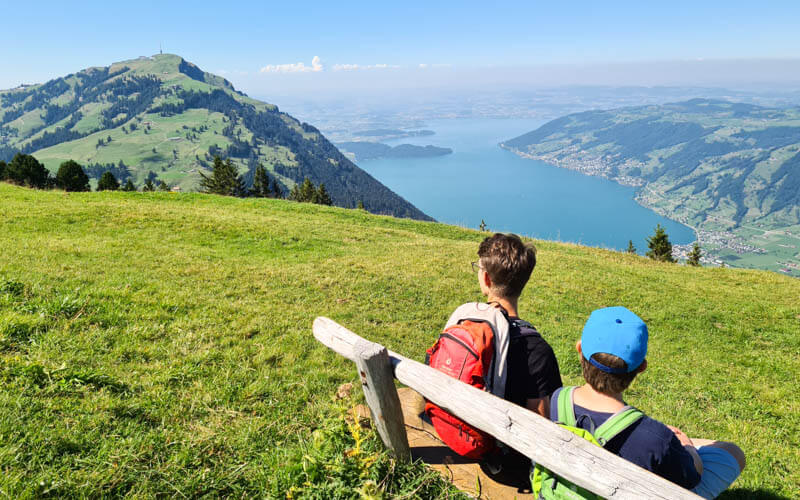
Many mountain areas have tiny private gondolas that don’t necessarily advertise. Although they usually don’t accept discount cards and travel passes, the base fare is often cheaper than other mountains even with a discount. For example, Grimmialp is only CHF 12 to ride the chair lift up to a beautiful panorama hike.

17. Don’t book a guide for your hike
We love guided tours because you often get inside info and special experiences that you couldn’t get otherwise. For example, we have done two guided glacier walks, which were a little pricey but also amazing experiences that we couldn’t have done on our own. Plus guided tours take care of all the logistics, so you can focus on having fun instead of worrying about the details. And they speak the local language to help smooth over any bumps.
But if you are on a tight budget, it’s important to know that a guide is not necessary for most hikes in Switzerland. Trails are well marked and free hiking maps are provided at the ticket offices. If you are hiking on official trails in popular areas, it’s easy to figure out. Plus you have my blog to help you!
If you do need a little help maximizing your itinerary, you can book a short call with me to review your plans. I’ll point out problems, offer tips that match your needs, and send you links to activities and resources mentioned in our call.
How to eat more cheaply in Switzerland
Restaurants are infamously expensive in Switzerland, a simple meal of pasta costing CHF 25 or more. And honestly, at most casual restaurants, the food is not amazing. Unless you are going to a very nice restaurant, your meal is rarely worth the high prices.
Here are ways to save money on food during your Switzerland trip.
18. Bring a picnic for lunch
Many Swiss hiking areas have mountain restaurants so you don’t have to carry any food. But that can be expensive.
For lunch, we usually have a picnic lunch. If we didn’t plan ahead, we simply buy sandwiches at a bakery on the way. Or we shop for picnic supplies from convenience stores at train stations and gas stations near our destination. These convenience stores usually have a surprisingly decent selection of local cheeses and sausages to grill, fresh sandwiches, and fresh produce.
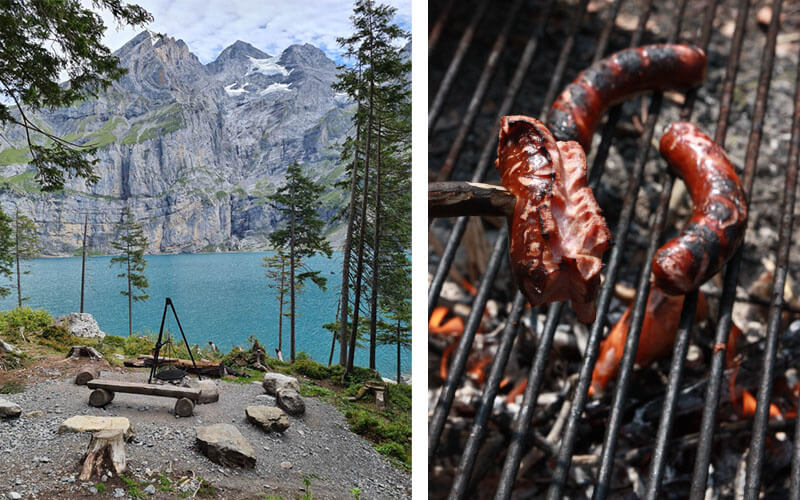
Many Swiss hikes have picnic areas with fire pits, wood and sometimes kindling. You just need to bring sausage and matches. The free hiking maps provided by the resort usually mark the picnic areas either with a table or fire icon. This is very helpful when planning your day. Many picnic areas are near playgrounds, so the kids can amuse themselves while you build the fire.
19. Service is included, don’t leave a big tip
Swiss restaurant prices include a service fee. So the Swiss do not leave a huge tip, but usually round up, giving the server a couple extra francs. On a bill of CHF 57.50, I would just round up to CHF 60. Feels weird for an American, but it’s totally normal. If you don’t leave a tip, it’s ok too.
If you do the math, subtracting a 20% service fee from your bill, you might find that the meal wasn’t quite as expensive as you imagined. I always think it’s cheaper to eat out in America. But last time I visited, I was surprised how expensive it was once you add in a 20% tip, as expected at many places.
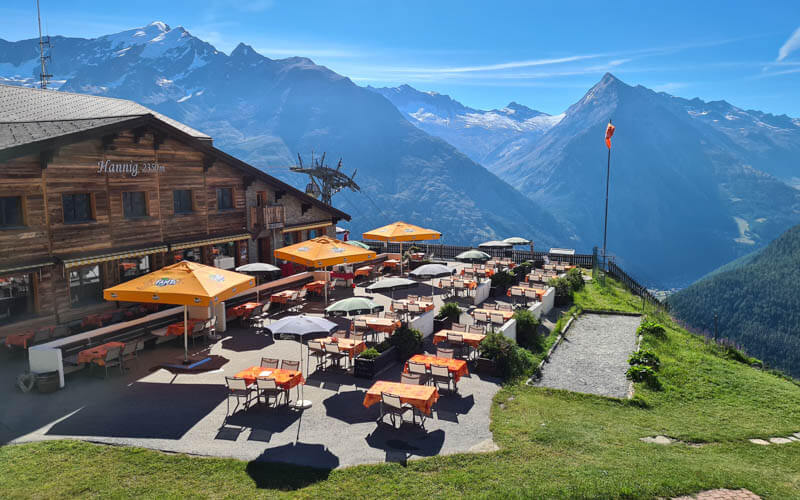
20. Drink tap water, but it’s not always free
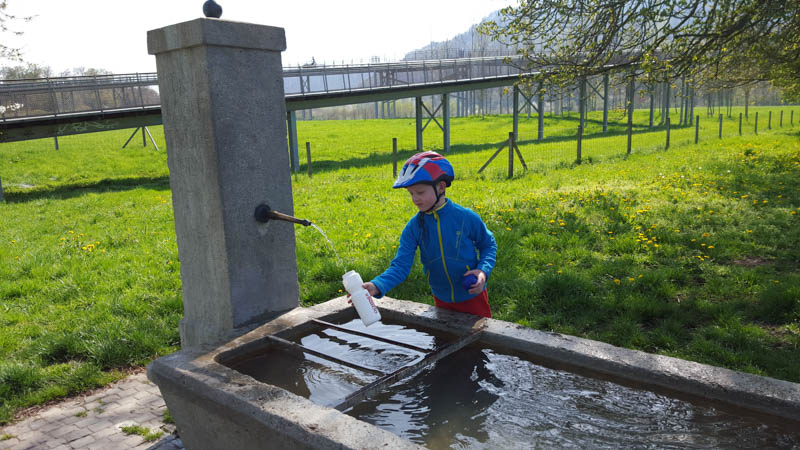
Tap water is safe and delicious in Switzerland. Most cities and villages have many fountains with drinking water free flowing. Unless the foundation has a sign that says “Kein Trinkwasser,” you can drink that water. So definitely bring a reusable bottle and fill it up frequently on your travels.
Drinks are ridiculous expensive in Switzerland. At a kiosk or restaurant, expect to pay at least CHF 5 for a soda, bottled water, or coffee. Beer isn’t much more but cocktails can be shocking pricy at CHF 15-20. At the grocery, bottled drinks are cheaper but still about CHF 2 for 500ml.
In restaurants, you can request tap water, called “Leitungswasser” or “Hahnenwasser” in German. If you just ask for water, they will almost always come back with bottled water (still happens to me). So make sure you very clearly ask for “Leitungswasser.”
Note that some restaurants will still charge a small fee to cover washing the glasses, usually CHF 2/glass or CHF 5-8 for a 1 L bottle. Mountain huts do not have tap water because they are too remote. All drinks must be helicoptered in and are therefore even more expensive.
21. Skip the hotel breakfast
Most hotel and B&B accommodations in Switzerland include breakfast in the overnight price. This can make your travel more efficient because you don’t have to worry about shopping or store opening hours (open late and close early in small villages).

But if you don’t mind grabbing a breakfast on the go, you might be able to save some money by skipping the included breakfast. Not all hotels will allow this but it doesn’t hurt to ask. But also note that many hotels in Switzerland do not have a mini-fridge. So don’t expect to be able to store groceries in your room.
FAQs
Should you avoid high season?
Many travel guides suggest that you avoid traveling during “high season” from June through August because of high prices and crowds. But in most places, prices aren’t lower in high season except the most touristy destinations like Zermatt & Jungfrau Region. And more importantly, if you travel outside high season, you may not be able to do all the activities you planned.
- Many mountain resorts don’t open for summer season until late June or July. And some mountains, especially in the Valais, close already in late September and first week of October. Other mountains are only open on weekends outside summer holidays.
- Many mountain trails are covered with snow until late June (until late July in 2021!) and it has snowed as early as the first week of September. So if you travel in spring or fall, your hiking options could be very limited (see my guide to Spring hiking in Switzerland).
- Some mountain amusements like mountain coasters, may be closed or have limited hours outside high season. Some mountain restaurants also close (or only open on weekends), so you have less options for refreshments.
- It’s not always much cheaper outside high summer season. Only a couple mountain resorts have higher summer fares for mountains, including Zermatt and the Jungfrau Region. Most other mountains have the same price all summer for their lifts. Hotels and camping do have higher prices during high season, but it might be worth the higher prices so you can do everything you want during your Swiss vacation.
That said, if you do want to “avoid high season,” the best time to come is end of August to mid-September. Kids are back in school, most mountains and services are open, and the weather is usually quite nice.
Is it cheaper to rent a car or travel by train in Switzerland?
Since Swiss train travel can be expensive, many people automatically assume that renting a car would be cheaper. But that’s not necessarily true, especially if you follow my tips in this post. You really need to do the math, considering the exact trips you intend to take and compare the costs.
A rental car can be more affordable than train travel if you are traveling with a big group and frequently traveling long distances. But remember to factor in gas and parking fees into your total cost. In Switzerland, gas in summer usually costs around CHF 1.80/liter (about $7.25/gallon). For most of my day trips from Zurich, I’d estimate I spend about CHF 30 on gas. Parking fees are usually CHF 5-10/day. But in tourist destinations like Grindelwald, you can pay CHF 25-30/day.
Switzerland also has lots of speed and red light cameras, which can add an unexpected cost to your trip. A ticket for going 52km in a 50km zone will cost you CHF 40. But going 61km in a 50km zone costs CHF 250. See speeding ticket fines.
I’ve heard people complaining about the costs of rental car prices in Switzerland. It’s not cheap but when I searched for cars in early September 2021, I could rent a compact car 4-seater for CHF 450/week. I think that’s pretty reasonable. Of course rental car prices fluctuate based on the season and availability, so your experience may vary.
Any more tips to share?
If you have any other budget travel tips to share, please leave a comment and help other travelers. If you’ve found any of these tips helpful, let me know!



4 responses
Hi there,
We are family of four from India. Two small kids age 8 & 2. We are planning a trip to Swiss next June for a period of two weeks. We would like to live in a rented apartment with low budget. Pl help me with everything begining from Airfare, VISA, transportation, accomodation and sight seeing,
Thanks
Jayanta
Sorry but I don’t offer these services. Sounds like you need a travel agent to help with your trip.
“Too good to go”! It’s an app where you can help prevent food wastage and get a cheap meal at the same time! Lots of restaurants, bakeries and even florists and supermarkets have joined up. I’ve used it a few times in my local town, and also when on vacation in other parts of Switzerland. Win-win!
Yes, this is a good tip. Thanks for suggesting it.